

 Spotify

 Apple Podcasts

 Goodpods

 Audacy

 iHeartRadio

 Youtube Music

 Amazon Music

 Audible

 Podchaser

 YouTube

 Castbox
 RSS Feed
Ep. 154 - How One Device Can Make Camps Safer Everywhere
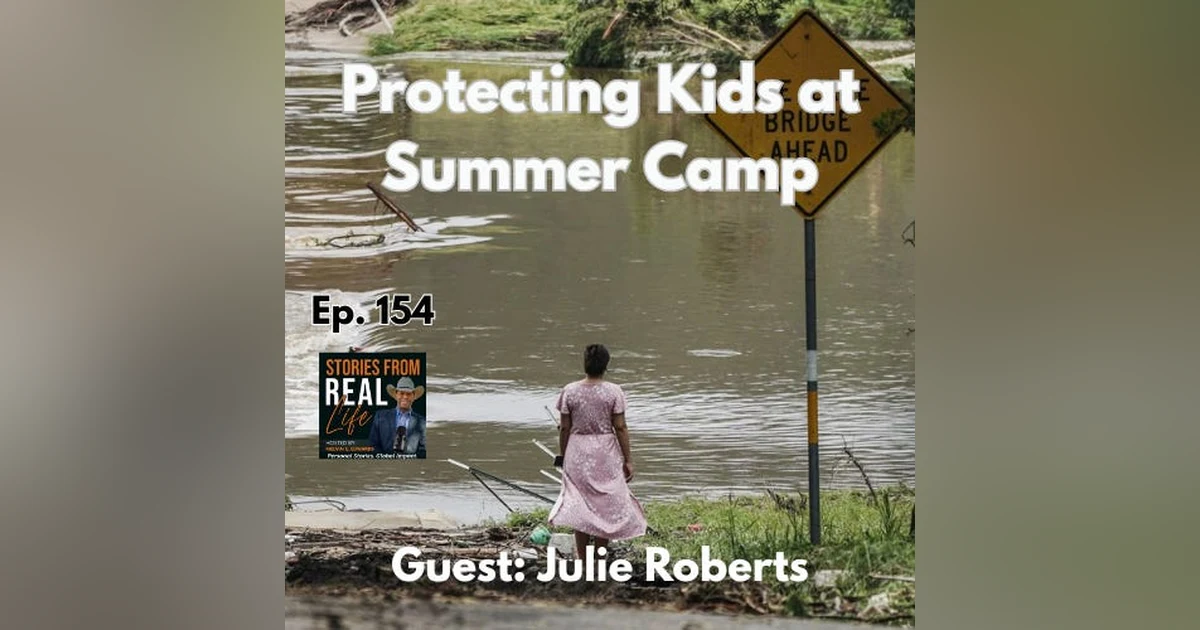

Summer camp should be all about fun, freedom, and the great outdoors. But when severe weather strikes, those carefree moments can turn dangerous in an instant. That’s why Julie Kay Roberts launched Signal & Shield, a national initiative equipping over 12,000 youth camps with NOAA Weather Radios and training staff to act quickly when alerts sound.
In this episode, Julie shares the urgent “alert gap” most camps face, why minutes matter in a storm, and how one simple device can save lives. We’ll explore the partnerships making it possible, stories from the field, and how you can help bring safety — and peace of mind — to camps everywhere.
🎙️ Whether you’re a parent, camp leader, or just passionate about preparedness, this is a conversation that could save lives.
www.psema.org/foundation/signal
Get full access to Melvin E. Edwards at storiesfromreallife.substack.com/subscribe
If you would like to support this podcast, please click on the PayPal link to make a donation today. Any amount is the perfect amount!
Thanks!
0:03 Today on Stories from Real Life with Melvin E. Edwards and guest Julie Roberts. Summer camp is supposed to be a place of joy, discovery, and connection with the outdoors. But what happens when severe weather strikes like it did in Kerrville, Texas this summer, and the only warning system is a cell phone signal that may not even reach the woods? Today, we're joined by Julie K. Roberts to talk about closing the alert gap, protecting campers, and giving peace of mind to families and camp leaders alike. why do we need a NOAA weather radio? You've got one on your phone. Well, at night you turn your phones off so the alerts don't go off. But if you have no cell service and no power, you have no way.
0:44 I say this is basically a brick, right? And so a NOAA weather radio can operate off a battery or even some of them solar powered. And also if you've got it on, it automatically sends that alert. It's not relying on someone outside the national weather service. And so After doing a lot of research and understanding these alert systems, I really feel the NOAA Weather Radio is a really good option for these camps to have that can operate with no power overnight whenever they need it. Pull up a chair. It's story time with Julie Roberts. You are listening to Stories from Real Life, a podcast by engaging storytellers for engaged story listeners.
1:25 Here's your host, author and journalist Melvin E. Edwards. Hello again, and welcome to another episode of Stories from Real Life. I'm your host, Melvin E. Edwards. Thank you for joining me for the podcast where personal stories can have a global impact. September is National Preparedness Month, and it's a good time to welcome back our guest, Julie Roberts. Julie, welcome back to the show. Thanks, Melvin. I really appreciate it. I look forward to our discussion today. So the last time you were here, we talked about your role, your former role in the Trump administration's weather disaster management.
2:10 Unfortunately, we're here now because of the weather disaster that happened at Camp Mystic in Kerr County, Texas, over the July 4th weekend. So you're the founder and CEO of PSEMA. Can you explain what that is and why it's so important right now? I can. So PSEMA, PSEMA, is the private sector project. Emergency Management Association. And that is an organization that was founded about four years ago to bring together business industry, government, nonprofit partners to work together before disaster and then come together after one happens and try to find ways to help a community.
2:50 And then earlier this summer, we actually created the PSEMA Foundation. which is another arm for us. So the association is a member's association and the foundation is a 501C3, which gives us a little bit of a different opportunity to support communities like Kerr County and other camps around the country. Okay, so how big is the alert gap that you're trying to close? And what risks do camps face today because of gaps in their early warning systems? So as you mentioned, I previously was with NOAA, the National Oceanic Atmospheric Administration under the Trump administration. I was director of communications, deputy chief of staff, and I worked really closely with the National Weather Service and the Hurricane Center during my time there.
3:37 I've worked with the National Weather Service for many years. So I grew up here in Texas. I happened to be on vacation when the July 4th floods happened in Kerrville. And I woke up that morning and the first thing I thought was, how catastrophic it was, but I'll be honest, we didn't know it at that moment, right? It was still kind of developing. but I also was curious of how the National Weather Service handled it. And so I went out and looked and they had actually predicted in some state reports 24, 48 hours before there was gonna be significant rain. No one could have predicted the amount of rain into rivers and those riverbeds were so dry that it was essentially concrete, right? You had all that water. And so when you have a 30 foot wall of water coming down, it's gonna be devastating no matter what.
4:21 And so I was looking and I, you know, as the event started to unfold and more information came out, what became very clear very quickly was that there was no cell service, kind of that area, just lack of cell service, plus power went out. And then you had camps that were built along the river. And the one thing, and then we found out later that, you know, no one issued out an alert through a manual system like a Code Red or some of those other systems that came people can sign up for. And so one of the things that did go out at 140 in the morning was that National Weather Service alert that was a flash flood emergency. That is somewhat of a newer phrase for that.
5:02 And when you hear that term flash flood emergency, that means it is a catastrophic event unfolding. And so National Weather Service issued their alert at 140 in the morning, but most people were asleep, you know, maybe, maybe not, thought it was a little bit of rain and didn't understand what was coming down that river. And so one of the things like, you know, days later, I wanted to find a way. How do we help other camps and how do we reduce the likelihood of the loss that we saw with Camp Mystic? And so I started thinking about it and I thought, well, if camps had a NOAA weather radio, not only the radio itself, but the actual information about how to understand the alerts and how to understand the the preparedness side of it, then maybe future events that would have woken up somebody in the leadership team.
5:50 I'm not saying it needs to be in every cabin, it just needs to be in one person's cabin, but it could have woken them up at 1.40 in the morning and potentially help them evacuate before the water came a couple hours later. And so the goal under the Cosima Foundation is we've partnered with the American Camp Association Midland Radio, who is one of the big producers of NOAA Weather Radio, and along with the American Logistics Aid Network. And our goal is to provide 12,000 camps. And that's not just overnight. That is all types of camps. So it could be youth camps, summer camps, religious camps, whatever type camps. But there's 20,000 camps across the country.
6:30 We want to try to provide 12,000 of those camps with a NOAA weather radio. And that can help things from a tornado that comes up, another flash flood, a severe lightning storm that maybe is moving in and the kids are outside and they can tell the kids to come in. And so our goal is to raise 600,000 that will allow us to provide those 12,000 camps. different camps with those NOAA weather radios. Not only that, but we'll be providing them also with the preparedness campaign and also opportunities for webinars and engagement with the National Weather Service and with other partners to understand what does it mean when you get these alerts and what action to take in the immediate. Okay, your plan is called Signal and Shield.
7:12 How did you come up with that as the name of it? Well, I thought about it, and so providing that signal, providing that warning, and so this is what we're referring to as the Signal and Shield Camp Initiative, right? This is our first focus. But with the idea that we take that and expand Signal and Shield into other preparedness campaigns for kids across the country. I'm in discussions right now of taking over a kids campaign, a previous project that I worked on that I'm hoping that we're going to be able to get the books and and be able to then start working on other types of hazards for kids. But it's really about providing that signal, providing that information in a real time manner and then providing that shield and not a literal shield, but that shield of protection and how to help.
7:58 not just camps, but children prepare. Also, what I found when I was with Florida Emergency Management is two things happen with kids. One, they come home and drive mom and dad, right? How many of you recycle because your child came home and said, hey, we're recycling now? But two, They grow up to be more prepared adults. So we've accomplished the preparedness messaging when they're little and they're more open to that. And then when they become adults, they're already there. And so that's really the signal and shield, providing that information and then trying to help provide that shield that can protect children and families going forward. Okay. So what's the biggest logistical or operational challenges in distributing NOAA weather radars, or I keep saying radars, weather radios to camps, especially the remote camps?
8:47 So one of the things is we have a partnership with the American Camp Association. So they have 3,000 partners and another couple thousand that are affiliates. But then we also have other associations that they have outreach to. And so From a logistics standpoint, our partner, the American Logistics Aid Network, is going to work with one of our warehouse partners through Allen and also one of our logistic partners. And so then Midland Radio will, once we've raised the money, we'll have those radios shipped to a central location. And then that partner through Allen will help us send them out to the camps. along with the information packet, then we'll also be able to start hosting throughout the year, these webinars and information sessions for them.
9:29 Our goal is, a lot of the camps operate 365 days or weekends or vacations, right? They're not all summer camps. And so our goal is to start partnering now and getting those pushed out. And then as we move closer to the summer camps, making sure that we have them into those camps that are those overnight camps across the country, where this will be really important. I was doing a little bit of research and found, you know, five, six different incidents since 2023 where camps were directly impacted by weather that happened and some resulting in loss of life. Not long after the flood, there was an archery group of Boy Scouts and Cub Scouts out in an archery field in New Jersey and they got struck by lightning.
10:14 Now, There had to have been some alerts that went out, but whether or not they were getting them on their phone. I also just wanna note, everyone says, oh, we all have a alert. Why do we need a NOAA weather radio? You've got one on your phone. Well, at night you turn your phones off so their alerts don't go off. But if you have no cell service and no power, You have no way. I say this is basically a brick, right? And so a NOAA weather radio can operate off a battery or even some of them solar powered. And also, if you've got it on, it automatically sends that alert. It's not relying on someone outside the National Weather Service. And so after doing a lot of research and understanding these alert systems, I really feel the NOAA weather radio is a really good option for these camps to have that can operate with no power overnight whenever they need it.
11:01 Yeah, this Camp Mystic was in Kerr County, as we mentioned. And Kerrville is definitely a special place for me and my family. When my children were little, we would go there on vacation every year. And my oldest daughter caught her first fish there in the river. My son had his first birthday party there. So lots of positive memories. for our family in that area. So it's really sad to see such devastation and tragedy in that same area that brought so much joy to my family. And, you know, I'd also like to note, I would love, obviously, camps are our first priority on this campaign, but also RV parks, because it wasn't just the 27, you know, girls that were lost at Camp Mystic.
11:44 You also had over 100 other people that were killed. And a lot of them were staying in RV parks or there for the holiday, the long weekend. And so also, how do we, you know, help RV owners understand having a NOAA weather radio is a good option when You know, that dynamic is happening. No power, no cell service or an RV park owner. You know, if it's a July 4th holiday and they've got it, they could have at least knocked on doors and maybe told people ahead of time. And so it really is that broader. How do we help communities and individuals all understand this is an option that would be a good option, especially for overnight? And it's portable. You can program it. And then you if you are in an RV and you're going to this national park and then this one, you program it for the area and you're still going to get those alerts.
12:29 And again, you know, we talked about it before, like National Weather Service has been under a lot of scrutiny and they've faced a lot of cuts over the last six months. And, you know, I was talking to somebody and they the person who would have done some of this coordination took the early retirement and he felt really guilty. And I said, well, he can't feel guilty because, you know, that wasn't his choice. But I just have to come in. The National Weather Service are very good at what they do. I trust them. I know they're going to push that information out. they're gonna be there 24 seven to make sure it's conveyed. And so how do we get it out from there is the key part. Okay, so training is a part of this initiative. How does the training, or what is the training for camp leaders involved?
13:13 And how do you ensure the devices are properly used once they're deployed? So when we get these, when we start distributing them out, one, we'll make sure it has a document that says these are the key alerts to be aware of. Again, the flash flood emergency, different than a flash flood warning. And then also offering them webinars and being able to say, okay, let's do these 50 camps or 100 camps or whatever it looks like. Get on and we'll walk you through how to set up the program, the radio in your area. It's pretty simple. There's a lot of instructions. but we wanna ensure that they understand what the alerts mean, how to set it up, if there's any questions, and then they always have a resource back to our association and foundation that we're happy to jump on and have another call with them, or maybe we need to provide them something else that we haven't thought about, or maybe there's a hazard that isn't one of our normal hazards we've talked about, You know, if it's in Alaska, maybe there's an ice hazard that we haven't thought about.
14:10 And so thinking through, like, what do those need? Because the last thing I want to do is send somebody a radio, not provide them the resources. And it just sits there and we see another Camp Mystic type situation. And and that's what, you know, as we tried to think a way to honor those that were lost during that, this was one of the ways that I thought, well, maybe if we can help prevent this in other areas. All right, and you mentioned earlier your partnership, your partners in this project are ACA, ALAN or ALAN as you called it, Midland Radio. How were these partners chosen and what will their roles be in this process?
14:51 So I've worked with Midland Radio for years, going back to my days in Florida. They're one of the number one producers of the Noah Weather Radio. They've been out there for, I think it's their 50th anniversary this year. So they've done this a long time. So it made sense to reach out to them first and say, hey, can we work with you? And is there a discounted rate of a normal radio? Because camps could go buy the radio off of Amazon or someplace. So I reached out to them. And then as I tried to figure out how do I find these camps? Right. I just went on and I literally like put it into Google and said, hey, where's the camp association? And I sent a blind email to the American Camp Association to like six leaders. And 24 hours later, I had an email back from them.
15:32 And we started this process probably about 10 days after the devastation July 4th, but it's taken time to get everything pulled together. I wanted to make sure we did this the right way and putting the right resources behind it. And then Alan, our other partner, that's somebody I've known, Kathy, the executive director for 15 years. I work with them through PASEMA. She's actually the first person I told when I founded the association. And because they're the logistics, transportation and warehouse partner, it made sense. They wanted to step up and help. Right. So we can get those radios delivered to them and then they can help us get them distributed out through the mail or however we decide to do it. So it really that those three partners made sense to partner with from a from a logistics standpoint, honestly.
16:17 Okay, so you mentioned there are 20,000 camps and your goal is to provide 12,000 radios. How do you select which camps are the most in need of those radios? Well, ultimately, Melvin, I would love to do 20,000, but everyone told me I was crazy when I said, let's go do 20,000. So I kind of took a middle of the number. The American Camp Association has roughly 5,000 that are either their members or their affiliates. So there's your 5,000. And so we'll start with that. And then from there, looking at other partners that maybe have other camps that are outdoors. And so working through those associations. Some of them, I had somebody with one of the states reach out and said, hey, what if XYZ State is interested?
17:00 And so after we get through that five, 6,000 that are through ACA, then also looking at areas that have that higher risk. Maybe there's an area that has a lot of tornadoes that come through there or a lot of flash flooding. And so how do we provide that? And so we're still working through kind of that other 7,000. Like I said, I just kind of had to put a number on it. But ultimately, I would love to find some partners and sponsors to work with us to do all 20,000. Let's just canvas this country with that radio and being able to provide that safety net. One of the things I was looking, Los Angeles wildfires from January. So the camps weren't in service when it happened and they didn't necessarily weren't impacted.
17:44 But one of the things when I was talking to ACA was they were saying is like those kids that lost their homes or were caught up in those fires were opening a camp as quick as you can provides them a place to go, that mental health, that having that community. And then I was looking in a lot of the areas that the camps use, the natural resources were destroyed in the fires. And so, again, the weather radio, if the kids happen to be there and there was a fire that broke out, that would be a benefit. Or maybe it's the staff even if the kids aren't there. But it's also just helping these camps become more resilient so they can reopen sooner to get those kids back into a safe place when something has happened.
18:26 All right. So once this program is fully implemented, how do you measure success? You know, I always, I had somebody asked me one time when I was doing a preparedness campaign in Florida and they're like, what's your ROI? And I said, my ROI is that when there's a hurricane that hits the state of Florida, if more people have prepared and have a kid and are less reliant on the government, we've succeeded. And in this situation, I think the ROI would be difficult to measure other than knowing that if there were to be another flash flood in Texas or North Carolina or one of these states that has a lot of the overnight camps, If that camp leadership receives that alert and is able to take action, then it only takes one for me to say this campaign will be successful.
19:13 And we may not be able to measure it. I mean, maybe the story isn't on the front page of the paper because guess what? They took the action and they were able to evacuate the kids and we're not gonna hear about them. Well, I'd like to be able to say, hey, I'm going to be able to show you this is our success. I think it's going to be those stories that come out after that Camp X was able to hear there was a tornado coming at him. And so they sheltered where they hadn't had an alert before. And so I think that's really how we're going to measure the success is that, you know, five, 10 years from now, we're not seeing the loss of life like we saw at Camp Mystic. So basically, the stories we don't see in the summer or evidence could be evidence of success.
19:55 Yeah, it really could. You know, it's interesting because there's a lot of camps in like North Carolina. So with Helene and that flooding, the difference was that it was in September. So there weren't kids at the camps. But what if that flooding happened in the middle of July? It could have been the same type of a situation. So, again, yeah, I think it's those not hearing those stories or having somebody in the camp leadership team pick up a phone or reach out and say, hey, guess what? We evacuated. And so that was our success. Okay. So what are some of the technical limitations or constraints of the weather radios? For instance, like maintenance, power supply, false alarms, that kind of thing. And how are those types of things being addressed if they could potentially come up?
20:39 So the radios have a couple options. One, they're usually plugged in, but they have a battery backup. So plug it in. If the power goes out, you still have a battery backup. Some of them, I'm not certain if the one where looking at purchasing right now, but some of them do have also a solar backup. So if you had to evacuate, you know, emergency managers have asked people to have a NOAA weather radio or something like it in their hurricane kits for the last 25 years. It's just now we're trying to expand that to other places and thinking about it in another way. But as far as like once it's programmed, if you live in an area, those programs, it's going to stay. If you were to say it was an RV and you were traveling, you can reprogram it.
21:20 It's pretty simple to reprogram. And so really the limitations on it are really slim, right? It's like, it really is one of the best systems out there to receive those alerts any time of the day. False alarms, I mean, we're not hearing you're not going to hear false alarms. Now, some people turn them off because maybe they're getting a flash flood warning or watch and they really just need the emergency. I mean, and sometimes, yeah, maybe people will get frustrated with that. But I would just say to everyone, like, continue to have them. Right. Like, because you're going to want that alert at three in the morning when there is something happening and your phone's not receiving those alerts.
22:00 All right. So how does this initiative intersect with a broader disaster preparedness or emergency management systems on the local or state level? Well, you know, it's National Preparedness Month, which is a key message for everyone. Remember, you have your preparedness kit, whether you live in a tornado area or hurricane or earthquake, think through your hazards. I was one time I was actually over in Italy and I walked past and there was an EOC emergency operations center and I inquired why. And they said, well, you're on a live volcano. And I'm like, oh, OK, well, let me figure out my hazards here. Right. Like a volcano is not in my planning list. Lived in Florida and Texas. But I just encourage everyone to think through where do you live and what are your hazards?
22:42 And then being able to have that plan and thinking through how to communicate should all the communication go down. It really, all disasters start local. That's one thing. And then it obviously, if it can't be managed at a local level, then the state comes in or the federal government. But we encourage everyone to think through their preparedness plans with your family, with your business. So PASEMA focuses on business resilience and business planning. We have business continuity plans. We want to help businesses get ready beforehand, right? So you can come back sooner when a disaster happens. And so- Working through and with the emergency management community from overall preparedness is what the SEMA mission is.
23:22 It's helping our business community prepare so government can focus on catastrophic events in those areas that don't have the resources. And then the more prepared and resilient we are as a nation, then the less we're going to rely on government when something does happen. All right. Have you run into any kind of regulatory policy or funding barriers so far? No, no. And I haven't thought about that. So great, Melvin. Now you made me think of something. So, I mean, no, we haven't thought from like there's no regulatory requirement from us for doing this. Right. I mean, this is an established normal weather radio is an established system that NOAA has promoted for years.
24:06 50 plus years. I will say here in Texas in the last couple of weeks, the governor just signed into law the new safety camp safety legislation that is requiring camps across the state to think through their preparedness planning and having an alternate source to receive weather alerts. So we think this campaign actually dovetails really nicely into that mission of what this new legislation is promoting. And so how can we support those camps? Do we need to help them figure out their preparedness campaign? Do we need to think, are there preparedness messaging? Do we need to look at different hazards? Do they have an emergency plan for this hazard in their area?
24:46 Is that something we can help them with as well? Again, that building those resilient camps, one, will also reassure mom and dad when they drop their child off that, hey, they felt through this. They know what they're doing. They have a plan for this. And so then also just hoping to avoid what we saw earlier this year. All right. In addition to training camp staff on this initiative, what can you do to make the community more aware or make parents more aware when there is a weather alert and the kids are safe, for instance, taken away from the camp to a safe area to let the parents know they're in an alternate location?
25:28 I mean, that's going to have to tie into what the camp's plans are under this new safety legislation. I'm sure that's part of that communication tool, right? You know, one of the heartbreaking things was to hear the stories of the parents that did not get the phone call that morning that said their child was safe or they had lost them or couldn't. Unfortunately, I mean, it's really sad that there's still one child that's still missing and it breaks my heart two months later. They haven't been able to find her. And so, you know, it's that part of it's going to have to be how does the camp handle their communication tools? But what the goal of our campaign would be to say this, you know, Camp X has taken this program and they're in your they're utilizing this.
26:13 And so they've got the resources, the training. And then almost the assumption that they're going to take that action to make sure those children are safe, whether they've taken them to another location or moved them to higher ground or have been able to call mom and dad and tell them what's going on. It really is just providing all the tools that we can that can help those camp leaders and decision makers. Make the best decision at one o'clock in the morning because we, you know, people, or they want to criticize and they forget that it was one o'clock in the morning along that river. You've been there. It's dark. There's no power and it's pouring down rain. And it's hard to understand that somewhere up, huh?
26:55 I was saying lots of trees, so that could block any- Lots of trees, and it was, no one could have predict that two rivers were gonna combine at the same, you know, that one place and have that much water come down like it did. And so again, just being able to provide the information to help them make a decision. So what are some of the costs of beyond hardware that you have to factor into making this a fulfilled idea? I mean, I will say that I think it's like 85 percent of the money we're trying to raise goes towards providing the radios. We've done very little. It's like 15 percent overhead amongst all of us. And we're a nonprofit.
27:37 All three of us actually are nonprofits. Midland is providing us a discount for the radio itself. but the three other organizations are all nonprofits. And so really the only other cost is a little bit of the funding to help put together the materials that need to go out. And then, you know, a little bit of our staff time, my staff time to help make sure we're coordinate the webinars and that type of thing. But 85, 90% of that money that's being donated is going to provide radios, which is the key part, right? That's what we want. Either the radio itself or the information that needs to go along that we have to produce at the same time. All right, in addition to hopefully one day expanding to all of 20,000 camps in the country, do you foresee potentially expanding this to even non-youth camps like parks and rec centers and maybe even internationally?
28:31 Yeah, I would love to see this like take off in camps, you know, in RV parks start to pick up the messaging and do something on their own. Right. Or we can coordinate that with them or boys and girls clubs. Maybe there's a boys and girls club in a community where a camp is also located that needs a weather radio. But it's an outside of the camp initiative with the radios is also the broader community. So I kind of talked about where I'm hoping to announce in the next month or so a kids campaign that we're going to take over all of the creative for that already has books that are established for things like, you know, when thunder wars go indoors at that type, you know, the thundering message or what are tornadoes and how to not be scared?
29:12 What is a how to evacuate? And so there's a whole series of books that have been written for kids that focus on the different types of hazards that are out there. I actually did a project with the state of Alaska that was a flood book. And so one of our rabbit was our first character goes to Alaska and meets his cousin, the snowshoe hare. And they talk about flooding and it's in a way to talk about, you know, moose gets caught in a flood. And it was probably one of the best projects that I got to work on. And so we're in discussions right now of taking that campaign over with the hopes that we grow our signal and shield into that broader kids campaign and being able to help kids understand The goal, too, is to not scare children about weather.
29:52 You have to educate them of what it means, but you can't make them so scared that they're not willing to go outside or they see a tornado. My poor niece, she's 16 now, but she would freak out when she was a child if there was bad weather coming. And so it's how do you help them understand what it means and how to prepare for it and respond to it without being fearful. And so that's our broader goal under the foundation is really build out an entire kids preparedness campaign that we can help make schools across the country understand what this looks like in providing the resources across the country. Yeah, information is so important. You talked about your knees. I used to be terrified of tornadoes. Growing up in Texas, it's a risk.
30:35 I went to college in Arkansas. That area is high risk for tornadoes. A bigger risk. Yes, and I learned... No, I decided I was going to learn everything I could about tornadoes. So I was close enough to the University of Tulsa where they had classes. So I took some classes there while I was in college. And I eventually became a NOAA weather spotter. I'm still officially a NOAA weather spotter because when I learned, it made me less afraid. When I was with Florida, we had a character. His name was Professor Tinkermeister, and we had a human version of him.
31:18 And we would go around and do outreach events at kids' events. And we had NOAA weather radios, and Tinkermeister was there, and this gentleman walked up. And this was probably eight years ago, and I still remember this conversation. And his little girl's name was Gabby, so she's an adult now. And he was telling us that Gabby was terrified of tornadoes, and she refused to go upstairs to her bedroom if there was severe weather anywhere. So Professor Tinkermeister took her aside because he loves to study weather, right? That was his thing. And so he took her aside and they talked about tornadoes and severe weather and he explained it. And then he gave her a radio and said, look, if you put this in your house, you'll hear an alert if something's going on. And so Gabby went off that day and I got an email from her dad later, a couple of weeks later, who said like, she was no longer scared, she understood it better, and she was excited to have her normal weather radio so she could understand what was going on.
32:06 And, you know, when you asked me about ROI, well, that, I don't know whatever happened to Gabby, I don't know if she's still worried about weather, but that little girl went home and felt better about what she was listening, you know, having to deal with, and she was sleeping upstairs when there was weather, the other part her dad said. and so that's really the roi is to understand that if you make a difference in one child's life when they become an adult they're able to talk about it but also they're no longer living in that fear and it really does take you know all of us to help them understand severe weather and what it looks like and how to you know prepare for it as well all right so if someone is listening right now and wants to help how can they help So you can go to, so it's PSEMA.org, so P-S-E-M-A dot org slash foundation.
32:56 So that is our foundation page. And from there, they'll find information on how to support the foundation and also how to support the Signal and Shield campaign. So we're asking for a couple things. One, you can donate as an individual. But what I'd ask is that if you are here in Texas in particular or someplace around the world and you have a company that this is something that you would like to partner with us on. We're looking for corporate partners because if we can get a few of those that'll help us really kick this off and to be able to raise that money to start with that 3000 and then eventually work up to the 12 and then we'd love to see the 20,000. And so being able to help us raise that money and support it, then we can start pushing these radios out.
33:38 And if you are willing and you have a company and maybe you're based out of a certain city, wherever, Kansas, wherever it may be, if you wanna work with us and help us say, okay, let's do Kansas, let's make sure we take in your corporate state, we'll do that as well. But we all live in hazards, whether it's a tornado, like we just talked about, or hurricane states, knock on wood, it's been quiet, we're halfway through hurricane season, or a flash flood, or as we saw with LA, the wildfires that happened in January, You know, there are hazards all around us. And so it's just it's all an effort to build out more prepared communities as we move forward. All right. It's September, late September, when this issue, when this episode is released and you started this initiative in August.
34:23 How's it going so far? We are getting a lot of traction as far as people talking about it. The fundraising has been slow as of now, but my hope is that we find the right partner that can help us start really promoting that out and generating. I think that once we find one big corporate partner, maybe we'll have other ones come in, but no matter what, we're going to continue to push forward. My goal, like I said, is this campaign will run until next May, right? Because we want to provide those radios to camps now that are in operation but then also making sure we've got the funding to provide the radios to the camps that will have summer camps overnight next year because i do think you know that's when parents will know okay this they've got this tool i'm good with sending my child off to an overnight camp for two weeks that if something happens they're going to receive these alerts and so You know, it's it we just launched it like mid late August.
35:22 And so we're starting to see some traction on it, but always looking for new partners. OK, and as a final question today, what one bit of advice would you like to leave with the listeners? Preparedness starts at home, whether it's your family or your business. It also then think about your other family members and then your community. But preparedness, as we talk about National Preparedness Month and is this campaign, preparedness needs to be on all of us. So I ask everyone to stop and think about how do you prepare? If a tornado comes through tomorrow, do you have a plan? Do you know how to contact somebody? If you're separated from your child because they're at school and you're at home, have you thought about that?
36:05 And so it really, my one message is that it takes all of us to build more resilient communities and all of us to have a plan to do that. And thinking through those that maybe haven't thought through it and encouraging them and helping them complete that as well. Okay. So our guest today has been communications emergency management expert, Julie Roberts. Julie, thank you for coming back on the show. I appreciate it. Thank you for the invitation and thanks for the opportunity to talk about this really important campaign today. Very important campaign. So please go to my website at podcastreallife.com for more information about my guests and the things we discussed today, including links to get to the initiative that we've discussed today.
36:49 That's it for today's episode of Stories from Real Life. Join us again next time for another chance to learn from each other. Until then, don't forget to shine your light wherever you go. Thank you for tuning in to this episode of Stories from Real Life. Don't forget to subscribe and share. Let's meet right here every Tuesday and Friday. See you then.


