

 Spotify

 Apple Podcasts

 Goodpods

 Audacy

 iHeartRadio

 Youtube Music

 Amazon Music

 Audible

 Podchaser

 YouTube

 Castbox
 RSS Feed
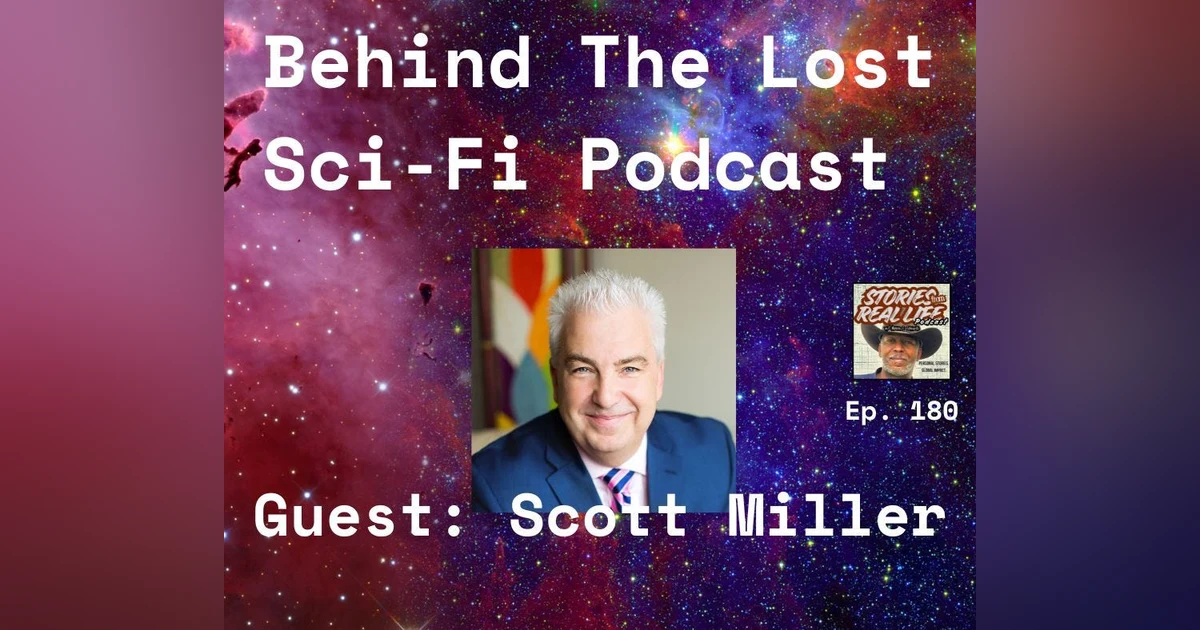
Ep. 180 - Scott Miller: Love, Loss, and a Sci-Fi Legacy

Sponsored by:
FOREVER Digital Storage - Their mission is to be the complete, permanent, and safe place where millions of families save and enjoy their memories for generations.
Episode Summary:In this episode, we sit down with Scott Miller—broadcaster, storyteller, and creator of The Lost Sci-Fi Podcast, a show heard in more than 190 countries and ranked #1 in 33 of them. Scott opens up about his extraordinary life story: getting his start in radio at 16, becoming Iowa’s youngest weekday TV sports anchor, surviving a devastating divorce, enduring the loss of his beloved wife just 113 days after their wedding, and nearly giving up on life entirely.
Instead of surrendering to tragedy, Scott rebuilt his world. He found new love, moved to Costa Rica, and launched a science-fiction podcast that has now surpassed three million listens and revived dozens of classic vintage sci-fi stories for a global audience.
This conversation explores resilience, reinvention, the healing power of storytelling, and the unexpected ways life gives us second—and third—chances.
Links & Resources:
* The Lost Sci-Fi Podcast: lostscifi.com
* Explore the full archive of classic sci-fi stories
Recommended For:Listeners interested in personal transformation, storytelling, grief and healing, podcasting, creative reinvention, and the enduring power of vintage science fiction.
Get full access to Melvin E. Edwards at storiesfromreallife.substack.com/subscribe
If you would like to support this podcast, please click on the PayPal link to make a donation today. Any amount is the perfect amount!
Thanks!
0:00 Stories from Real Life is sponsored by Forever, the digital shareable platform that preserves all of your precious memories forever. This is Melvin E. Edwards, the host of Stories from Real Life. One of the things I'm passionate about when I'm not doing this podcast is genealogy. And if you've ever researched ancestors, you begin to understand how short generations really are. That's why it's important to preserve those memories while you still have the chance. And that's where Forever comes in. forever is the world's first permanent shareable digital home for all your memories look your photos videos and family stories deserve more than temporary cloud storage with a forever storage account your files are guaranteed safe and protected for your lifetime plus 100 years your lifetime plus 100 years And here's what I love.
0:51 No endless monthly fees. You can make a one-time payment or break it down to 24 monthly installments and you own your storage. It's all backed by the forever guarantee fund built to preserve your legacy for generations. Check out my website, podcast, real life.com and click on sponsors or the link in the show notes. Your memories are the stories from your real life forever. Make sure they truly last forever. Welcome to Stories from Real Life. Our newest episode today features one of the most extraordinary guests we've ever had, Scott Miller, creator of the Lost Sci-Fi podcast, which has reached listeners in more than 190 countries and hit number one in 33 of them.
1:42 But this episode isn't just about a successful podcast. It's about a man who lost everything, his marriage, his career, the love of his life. and then found a way to rebuild from the ashes. If you need a reminder that transformation is possible no matter what life takes from you, this is the episode to hear. This is Stories from Real Life with Melvin E. Edwards. And today's story is Scott Miller's Love, Loss, and a Sci-Fi Legacy. You are listening to Stories from Real Life, a podcast by engaging storytellers for engaged story listeners. Here's your host, author and journalist, Melvin E. Edwards.
2:36 Hello again, and welcome to another episode of Stories from Real Life. I'm your host, Melvin E. Edwards. Thank you for joining me for the podcast where our personal stories remind us how much we can learn from each other. My guest today is Scott Miller. He has lived a dozen lives before the world knew him as the voice behind the Lost Sci-Fi podcast, Radio at 16, TV sports anchor, news anchor. Then came the hardest chapter, the end of a 30-year marriage, leaving his dream job, then reconnecting with a prom date, falling deeply in love, but unfortunately losing her less than four months after their wedding. Today, his podcast is number one in 33 countries and heard in more than 190.
3:19 He's here to share his story and tell me how to help this podcast grow. Scott, thanks for being here today. Melvin, thank you. It is an honor and a privilege. And I'm telling you, I really was looking forward to this because you are doing like everything right that a podcaster needs to do to be successful. So you are a great example of many of the things that I share with people. So I am thrilled to be with you today. Keep talking. Keep talking. It sounds great. Well, it is the honest truth, and I mean it. And... You know, one of the funny things about life is you never know where it's going to take you.
4:00 You may think you know. You may hope you know. I never expected to be living in Costa Rica. I never even expected to start a podcast. So you never know where life's going to take you. And life is not about... And it's funny because I think now I'm closer to 67 than 66. And I just... I am amazed at this stage of my life that this is where I am because I never would have predicted any of what has transpired in the last several years of my life. And so you don't get to choose how things happen to you, but you do get to choose how you respond to those things that happen to you.
4:42 And man, that's what I'm excited to share with people today. All right. And I'm excited to hear your story. So let's start with your podcast. What inspired you to start the Lost Sci-Fi Podcast and why focus on vintage science fiction short stories? Well, great question. The first thing is I came to Costa Rica. I moved here, got married to a beautiful Costa Rican woman. Long story short, we came here for her daughter's wedding. And then we spent about two weeks additionally in Costa Rica on the coast, not very far from where my wife was born on the farm. And I was just like amazed.
5:24 and how beautiful this country is. And so anyway, long story short, I go back to Dallas. Her mother had developed cancer and so she stayed behind. She said, okay, if I stay for a few weeks, I said, stay as long as you want to stay. I go back to Dallas and Melvin, all I'm doing every day is looking at pictures. of Costa Rica. All I'm doing every day is looking at videos and I am dreaming about Costa Rica and I can't stop thinking about it. So I called her up and I said, would it be okay with you if we moved to Costa Rica? And 45 days later, I was here. 45 days. I made the decision and boom, I'm here. So anyway, how that relates to the podcast, I have right behind me, you see the one of the walls in blue.
6:10 That's my sound booth. And I bought that while I was in Dallas and I was going to sell it. My plan was to sell it and it's big and it's bulky and it's not inexpensive, but nobody would buy it. So I thought, well, I'm not going to give this thing away. You know, it costs several thousand dollars. I'm not just going to give it away. So I brought it to Costa Rica with no intention of using it. Now, fast forward, I come to Costa Rica. I've got a couple of freelance jobs that I'm thinking I'm going to continue to do in Costa Rica. Well, guess what? Both of those within 60 days disappeared. So now I'm like, what the heck am I going to do?
6:51 And I had been narrating audio books. That's why I had the booth. And so I thought, well, I'll narrate audio books again. And so I started doing that. And while I love narrating audio books for other people, What I found, Melvin, was at that time, I was in my late 50s before the podcast. And so what I found was that as soon as I finished an audio book for somebody, I'm basically unemployed again. I needed to find somebody else, another client, to narrate an audio book for. Well, here's the problem with that. If I was sick and couldn't work or just didn't want to work, no income.
7:33 So I'm like, well, I don't want to know that I want to do this when I'm 70 or 75 or 80 years old because I got to keep doing it because I had done what many people do, but I had done it worse than most. I messed up and I didn't have any money saved. So I had there was no retirement. So anyway, I started narrating these audio books for other people. Then all of a sudden I thought, what's my passion? What I really love. And I go back when I was a little kid to 1968 and the movie Melvin Planet of the Apes came out. And I will never forget that movie. I go to the theater. I saw all the promotions for it.
8:14 Go to the movie and just fall in love with science fiction. So when it came time to how am I going to make this work? How am I ever going to build any kind of a future for me and my wife? I thought science fiction. So I did a little research into public domain. Vintage science fiction. And so I started narrating those stories while I was still doing a few audiobooks for other people because I needed the cash flow. So I tell my wife about this. And the first month, we made $5 selling these audiobooks. Five bucks, Melvin, five bucks.
8:56 My wife is like, okay. She was not happy. Then a few months later, somebody said, why don't you start a podcast? And I did a little research. I went online on these audio book narrator forums on Facebook or groups. And I saw where this one guy said, I have a podcast and I love it. And it's very profitable. And then he was blasted by all these narrators who were like, you mean you actually give away your work for free? That's ridiculous. That's crazy. And I thought, well, now wait a second. Maybe there's something to this. And so a few weeks later, the Lost Sci-Fi Podcast was born. And there's so many twists and turns in that story, as you just heard, that I came very close to never having a podcast or never moving to Costa Rica or never bringing my booth with me.
9:48 If somebody had offered me a thousand bucks for it, I would have taken it. And then I couldn't do what I do now. So isn't it funny how life goes and you never know the direction? But you do get to choose how you handle that rejection or the way life moves. This sounds like a story from real life. We're unfolding right in front of us. Exactly. You know, and I love, I love the name of your podcast because you are exactly every, every episode is exactly what you say it is. And that is so, and you know, if you've listened to a bunch of podcasts, you know, it's not always that way. And, um, but I commend you for, for what you have done.
10:31 And I hope That maybe you and I stay in touch in a year from now or two years from now. Maybe we revisit this. But if nothing else, I just want to track your success because I'm proud of you and I'm proud of what you've done because you're doing it right, man. Well, I appreciate that. My ego needs this boost. So I need a wingman. You're hired. But this is your story. This is your story today. So let's continue. So you built an audience in nearly every country in the world. What do you think resonates globally about these classic sci-fi tales? Well, first of all, these are the people that built science fiction.
11:11 Some of them... actually did science fiction before it was even called science fiction. Voltaire, of all things. I had somebody, I get a lot of feedback from my listeners. Somebody said Voltaire did a science fiction story. I said, Voltaire? It's back in the 1700s. So, I mean, that's before Frankenstein and Mary Shelley. So part of what I think resonates with people is these are the greats. These are the people that launched this genre before it was called science fiction. And so that's part of it, the nostalgia of it.
11:53 And most of my audience is in the 35 to 45 and up category. Not all, but most. And so a lot of them, Melvin, they bought these magazines when they were kids. And they started reading these magazines when they were kids. And now they get to relive that. through the Lost Sci-Fi podcast, and that excites people. And this is the other thing. I'd love to say that I'm this brilliant guy, and I had this all mapped out, and I knew it was going to be a huge success, and that's all hooey. That's not true at all. What I knew I was going to do, Melvin, I knew I was going to do a genre that I am passionate about, What I knew is that I would start and I would go until either I'm not here anymore or my health prohibits it, but I will not stop.
12:50 And I knew that every story I would tell to the best of my ability. And we're talking about, you know, a lot of the podcast is Ray Bradbury, Philip K. Dick, Isaac Asimov, Arthur C. Clark. These are legendary people. And then I also find people that nobody's ever heard of before that did one story. And then that's it. And so people like that. And part of my life, I was a television news reporter, as you mentioned earlier, a news anchor. So I love storytelling and I love telling the stories of these authors that people have never heard of before and sharing those stories about who they were, what else they did in life, where they were born and all that stuff.
13:33 So I think that resonates with people as well. And then one of the other things is that's all you get on the podcast, just as you're telling stories or having people share their real life stories. That's it. That's all I do. I stick to it and I do it to the best of my ability. I recognize in our conversation today, Melvin, is exactly like this. This is going to be around forever. OK, this what you and I are doing right now is going to be around 10 years from now. People that have never heard of the Lost Sci-Fi podcast will discover it thanks to you and today's conversation.
14:15 So with that in mind, every episode I do, I do to the best of my ability. And I think that resonates with people. They know they're getting the best I've got. I'm sure they appreciate that, too. So you mentioned some authors, some sci-fi authors who are not as well known. Who are some a couple of names that you think are underappreciated or not just not known at all? There's a woman by the name of Mary Carlson who did one story. And now that I mention her name, I can't remember the title. Something about cold. Anyway, she did one story. That's it. And I get people to say, are you sure she didn't do another story or two more stories?
14:58 No. And here's an interesting one that I did the first story of his just a few weeks ago. Edward Page Mitchell. was a newspaper editor in New York in the 1800s. And he wrote science fiction and included it, I believe it was called the New York Sun, if I remember correctly, in the 1880s and 1890s. He wrote these science fiction stories, sometimes didn't even include a byline, so nobody knew who wrote it, but it was in the newspaper. And then he wasn't discovered, really, until the 1970s. So 80 years goes by and this guy, nobody's heard from him.
15:41 And he does great stuff. He does great stories. And so I've done two or three of his stories so far. And there are many more that I will do. And of course, they're all in the public domain from the 1880s and 1890s. But that's just another name that comes to mind. And then here's an interesting one. Later, as soon as we're done, I'm going in the booth and going to record a story by Robert Block. Well, I'm like, a lot of people don't know Robert Block, but they know Robert Block's work. The Alfred Hitchcock movie Psycho was adapted from his novel.
16:21 So Robert Block was big in sci-fi. And I don't know if you're familiar with H.P. Lovecraft. He did a lot of weird. Yeah, he did a lot of weird stories and a lot of far out stuff was not during his lifetime was not recognized. the way he is today. And, and Robert Block communicated with Lovecraft and, and influenced Lovecraft influenced blocks work. So there's so many fascinating stories to me. And then I share, it's funny. Um, I share in the beginning, the first time you hear from an author, I usually share his backstory.
17:05 Sometimes it's 30 seconds because that's all we know. We know that Mary Carlson wrote one story. We know a little bit about her and that's it. Nothing else exists. Sometimes it's a little longer. And I used to get in the beginning of the podcast, a lot of grief from people like, just tell the story, just tell the story. And I'm like, well, I never said this to them, but I want to say, But I did say, my polite answer was, I love the backstory. I love finding out about these people, discovering who they were. And I think if I love it, other people would love it too. What I wanted to say is, it's my podcast. I get to do what I want.
17:46 But of course, that would be offensive. That would be offensive. So I didn't say that. But So that's how it kind of developed. And even though I took a lot of grief, here's what's fascinating. Almost four years later, Melvin, guess what? I get a ton of comments, emails, five-star reviews of people talking about the backstory. So sometimes you just got to stick with your gut in spite of the criticism that you may face. Absolutely. Absolutely. So when we get off, when we finish recording, that's when we're off air, I want to tell you a Ray Bradbury story. Cool. I want to hear it. So I'm intrigued by that little teaser.
18:30 All right. So let's talk about how you help podcasters. How can podcasters grow their show and improve the quality? Well, first of all, you need to make a non-negotiable commitment. In other words, here's... I don't know how accurate these statistics are, but I've read that the average podcast doesn't get past episode three. And I do know for a fact that most people quit within the first six months. The problem is that anybody who's ever listened to a podcast... And says, I could do that. And they may be right.
19:10 They may very well be right. But a lot of them aren't very committed. So they do it. And as you and I both know, because you've done almost 200 episodes. Congratulations on that. Almost everybody that's been doing it, you realize, man, this takes a lot of work. And especially like people said to me in the beginning, what was your monetization plan? I say, what was my what? I had no monetization plan. I had none because I didn't know how to do it. I am Melvin. There are a lot of people in life who are ready. Aim, aim, aim, aim, aim.
19:55 Fire. You are talking to a guy who is ready. Fire. Fire. aim, but it's the action of creating a podcast and consistently creating a podcast that helps you grow your audience. So if you're not fully committed, it's easy to quit. People quit every day. People quit high school. People quit college. People quit jobs. People quit marriages. It's easy to quit. It's easy to start a podcast, but it's also easy to quit. And so most people quit because they think it's going to be easy. Unrealistic expectations.
20:37 Here's what's interesting. I did this just for our conversation today. After one year on Apple and Spotify, one year I had 478 followers. Now I busted my behind and to create those podcasts for one year. 478 followers. You know that 478 followers doesn't mean 478 listens to every podcast. Some of those people followed and never heard again. So, you know, I wasn't getting that many people listening in the beginning, the first year. If you have the mindset, as you mentioned, I'm going to be rich.
21:19 I'm going to start a podcast. If that's your mindset, you're setting yourself up for failure. And if your mindset is you're going to get thousands of people listening to every word you say on every podcast, you're setting yourself up for failure. You need to be realistic. Realistic is this. Joe Rogan started his podcast in 2009. It didn't really take off until six years later. Oh. Joe Rogan is a celebrity, a guy that's on television, a comedian, an actor, all this stuff. Joe Rogan has advantages, Melvin, that you and I will never have.
22:03 And it took him six years. So I'd love to ask him, Joe, why'd you do it for six years? But I know the answer because he wanted to, because he was passionate, because he had a non-negotiable commitment to it. That's what people need to remember. That's the key. And just to follow up, after one year on Apple and Spotify, I had 478 followers. After two years, 3,500, not yet four years, just on Apple and Spotify, I have almost 11,000 followers today. And there's a lot of other platforms where I have 1,000, 2,800.
22:45 So it took a while to get this thing going. And discoverability. People have to discover your podcast. You know, I didn't have a, I didn't spend money on advertising. I didn't spend a dime on advertising the podcast for the first three years and six months or three years and three months. So it's a long game. You got to keep that in mind. And if you don't, You're setting yourself up for failure. You're going to quit. That's a good reminder. So the podcast, even though people quit every day, new people start up every day. And it's a crowded podcast landscape.
23:26 How do you define success for The Lost Sci-Fi beyond downloads and ratings and followers? Well, number one, there's somewhere between three and five million podcasts that have been out there in the universe. Most people say it's probably somewhere around 4 million. That's a lot of podcasts. Now, the majority of those are inactive. They haven't done a new episode in a week, a month, a year, six years, whatever. So you need to, while there are a lot of podcasts, millions, you got to recognize that just staying in the game, just doing it puts you ahead of almost every other podcaster.
24:12 So, you know, just staying in the game, doing this. Now, here's the other thing. I look back at my first episodes and like most of us, and even though I have a background on radio and television, I wish I had done things differently on some of those first episodes. But I did them. And I'm going to continue to do them. I'm going to continue to improve. You know, I don't know if you're familiar with the motivational speaker, Les Brown. Love that guy. Yes. Interviewed him once on the radio in Dallas. Great guy, actually very personable, just a really great guy. But Les Brown said something to me on the radio, and this is 15 years ago or more.
24:56 I don't know. Les Brown said, when you're speaking, you need to listen to the listening. And what he meant by that is if you're in an audience of 2000 people and there's talk and murmuring and everything, you're not doing a good job. Because really truthfully, and I have thankfully spoken in front of two and 3000 people many times. I know that if I'm on. It's quiet when I want it to be quiet. And they're laughing when I want them to be laughing. Okay. So how do you relate that to a podcast? Listen to the listening. Well, in a podcast, now I ask for feedback and I get emails almost daily from listeners around the world, which is like super cool.
25:43 But I listen to what they're saying. OK, I also pay attention to the reviews. Now, there are haters in the world, Melvin. So you're going to get eventually if you haven't gotten them yet, you're going to get somebody that just beat you up verbally on a review. That's going to happen. Nothing you can do about it. You can have the greatest podcast in the world, and still somebody's having a bad day somewhere in the world, and they're going to take it out on you. I got one review recently on Apple Podcasts, and I do pay attention to this. On Apple Podcasts US, I have 300 and some reviews.
26:23 or ratings and reviews and a 4.7 average. And with that many, that's a good average. At least it is to me. But I got somebody recently that just verbally abused me that said about all this podcast is good for is when you want to go to sleep. And that's how I use it. I mean, they just destroyed me. So obviously, but I do listen to them and read what they say. But when the majority of people are saying, you're great, I love your podcast, when the majority of the feedback you get is positive, then that's how you know you're on the right track.
27:04 But now an interesting point, when I first started narrating audio books, I didn't know what I was doing. Freely admit that. And so I would get feedback and, and people were beating me up, but guess what, Melvin, they were right. What they were saying was right. As I stopped to think about it. And then as I listened to other people do audio books, I went, wow, I see what they're saying. So you do need to listen to what people are saying about your podcast. Um, As anybody should get feedback in their lives, not just podcast related. But yeah, you got to listen to the listening.
27:46 And there's great wisdom from Les Brown in that statement. Great, great wisdom, great advice. So do you ever see your Lost Sci-Fi podcast expanding into other media, like audio dramas or animated shorts even? No, I don't. And I'll tell you why. One of the keys to success in the podcast world is to be consistent and When somebody subscribes to my podcast and, and like I'll release an episode and there'll be 5,000 listens within 24 to 48 hours. And eventually it can grow to 10 or 15,000 or more. But when I release an episode, I know that my listeners know exactly what they're going to get.
28:31 Okay. Exactly what they're going to get. Like to illustrate, to use you as an illustration is, People know they're going to get stories from real life and they love your podcast. And so they subscribe and they listen to every episode. Well, guess what? If next time they listen, you're having a political debate with somebody on the left and somebody on the right, and it gets heated and vicious and nasty, like so much of today's political discourse, people are going to go, what happened to Melvin? What's going on? They're not going to like it. So in my case, I do some stories that some of my listeners say, well, I don't know that that's science fiction, Scott.
29:13 That's more horror or whatever. And while that may be true, when you listen to the Lost Sci-Fi podcast, you know exactly what you're going to get. To do it right for me. Now, this is just for me. But for me to do it right, I got to give it everything I got. So all I have in me, Is this one genre, a tight niche or niche, as some people call it, and that's what you're going to get from me? And I really, I could, this same person that questions some of the stories and whether or not they're sci-fi, I said, maybe you should start another podcast, Scott.
29:55 Start a horror podcast. And that would just take me away from my focus. I will also say this. I was tempted recently. In the last few months, because somewhere in the universe, somebody has said that I have guests on the podcast. Well, I don't, because all the people that I would interview would be the authors, and they're all dead, with the exception of Robert Silverberg, who's in his 90s. He's the only one that I've narrated a story for that's still alive. So I can't do interviews, but every week I get two to five interview requests from current science fiction authors.
30:38 I thought, Melvin, about starting, just like this, an interview podcast with these authors about sci-fi. I'm thinking, well, it wouldn't be too difficult, and I could do it, and I could maybe get some of the lost sci-fi listeners to go over to listen to this other podcast. And then I thought, you know what? So much time it would take to do it right. So much effort, so much energy. I'm going to stay very focused. I am going to maintain consistency in my niche of vintage science fiction. But it's a great question. And I do get that a lot. But and that's the thing.
31:18 You know, I know this person that has like five podcasts. I'm like, how? How do you have time? How do you have attention? You can split five different ways. I have no idea. But so with me, you're always going to get vintage science fiction and only vintage science fiction. I have stopped doing other people's audio books with one exception that I'm currently doing. And it's a guy who I've become friends with, who's a listener of the podcast and And he's a great writer and he wrote modern sci-fi, but like kind of from very similar to the vintage sci-fi writing.
32:00 And so I am narrating his audio book or his book for him, but that's, and it's taken so much time, probably going to be the only one I ever do. I'm focused, man. Appreciate that. I'm sure your listeners appreciate that. So one more question about podcasts. So which episode are you most proud of? Gosh, I have 462, Melvin. It's like, which one of your 462 children do you love the most? Let me just give you three or four favorites, okay? I can't do one. I can't do one. There's a guy by the name of Ross Rockland. Ross Rockland wrote a story, and he had some success.
32:43 He wasn't a huge name, but also not a one-hit wonder. Ross Rockland did a song. My old DJ days are coming back in my head. Did a story called Chicken Farm. Chicken Farm. It's hilarious. It's fun. It's offbeat. I love that story. Isaac Asimov has a story, and it's appropriate for this time of year, Christmas on Ganymede. Great story. And it's so different. It's one of the reasons why I like it. It's so different from the other stories that Asimov did. And there's a Bradbury story, Dwellers in Space.
33:24 It's just fascinating. And so there's three. I could go on and on and on, but there's three good ones that if somebody is doing a search and they want to look for those stories, those are three that I would recommend that are not as well-known, even though it's Asimov and Bradbury for the last two, not as well-known stories. Man, I got to say this. People give me credit all the time for the curation of the stories, for the stories that I choose. And really, the credit goes to the authors and the publishers of these magazines. I really deserve almost no credit whatsoever. The only thing I will say is that I read every story before I narrate every story or choose to use it on the podcast.
34:13 And my number one criteria is I have to enjoy narrating it. That's the number one criteria. The second criteria is, is it somebody, is it Bradbury, Asimov, Clark, one of those big names. But then in addition to that, Or the opposite of that, is it somebody we've never heard of before? Like I said, I've never done a Robert Block story, but I'm going to do one as soon as we're done. Go in the booth and record it, release it later today or tomorrow. So, yeah, it's tough, man, to name it because there are so many phenomenal. Oh, and a Mary Shelley story. What's the name of that one? I can't remember the name of it. Maybe I'll remember it later.
34:53 Mary Shelley wrote a lot of other stuff besides Frankenstein. And did you know, Melvin, a little known fact, when Frankenstein was first released in the 1800s, 1818, I believe, when that was first released, the author was unknown. And the reason the author was unknown is because Mary Shelley didn't think the world was ready to hear this crazy story, far out story, written by a woman. I actually did know that. I did know that. Did you? Yeah. Well, you are. That's pretty cool. Isn't that a cool story, though? It is. It actually was not that unusual because a lot of women use pseudonyms, pseudonyms.
35:37 And because they just don't think the world, men in particular, would be ready to accept it from a woman's voice. Well, you are absolutely right. And I do a lot of those stories. Funny thing is I did, I don't know how many episodes, 100, maybe even 200 episodes before ever doing a story written by a woman. And then one of my female listeners said, why don't you ever do a story by women? I said, you know what? That's a great question. And it wasn't on purpose. It's just that there were so fewer stories written. You know, it's a small percentage of the vintage sci-fi genre written by women. So I started doing it. And then I started paying more and more attention. Now I've done, I don't know, 15 hours worth of stories just by women, which is probably somewhere in the range of 30 stories or so.
36:24 But yeah, you're right. It's very astute. Not many people know that. All right. So let's talk about your personal life a little bit here. So as I mentioned in the beginning, you've experienced some profound personal loss and you've reinvented your own life several times. So how has that shaped your philosophy as a storyteller? Wow. Isn't that a great question? To be open, to be open to who knows what, you know, We all go through challenges in life. We all face who knows how many challenges. My father recently passed in the last couple of months. Sorry to hear that. Thank you. That has been a challenge because Gary Miller was not my biological father, but adopted me when he married my mother when I was five and treated me, Melvin, like gold.
37:15 I mean, he sat me down when I was five years old. I still remember the conversation, sat me down and said, I am not your stepfather. You are not my stepson. You are my son. I am your father. And he lived that journey. For 60 plus years. And I am grateful. I am the man I am today because of who he is and how he lived his life. What a great example he was. And now that I got off talking about my father, which has been very difficult. My dad was my biggest fan. When I was on television, dad watched me every time. Every time. When mom and dad came to Costa Rica six years ago and they spent three months with us.
37:58 In Costa Rica, it was a glorious time. My dad would tell my wife when I was in the booth working on an audio book, my dad would tell my wife how proud he was of me. And yeah. That's really special. Thank you. Now that I got talking about dad, I forgot what the original question was. I'm sorry. How have your personal losses shaped the kind of storyteller you became? Yeah, I think I have more patience now. I'm more in tune with what people are saying and what they are meaning. You know, loss is something that can make you or break you. And so there are times I have a newsletter that I send out weekly and near the bottom of the news, actually at the very bottom of the newsletter, it talks about my dad and how he said that anything worth doing is worth doing right.
38:51 And so those losses have made me more in tune with what's really going on in the words and maybe in the hidden meanings that a character experiences. It's made me better. I wouldn't want to go through any of the losses that I've gone through. I would not choose them, but who would? So were there moments when your own resilience helped you push through creative or professional obstacles with your podcast? Yeah. Many times there are, it's funny. There are times there's a, are you familiar with the term imposter syndrome? Yeah. Yeah. Yeah. Personally, we all faced that.
39:35 Yeah. We, we all go through that. We all go through that. Um, and, and, And I am thankful that we've been number one in 33 countries. I didn't expect it. Had no idea I'd ever hit number one in one country. Truth be told, Melvin. But I push through. There are stories that I say to myself, I'm going to do. And then sometimes I go in the booth and it ain't easy. And sometimes it's the way you feel in the moment. The one thing about doing an audio book, or in this case, the podcast, which is a part of the audio book, or the audio book is a part of the podcast.
40:17 You got to be in the right mood. You got to have the right setting. Everything's got to be, at least for me, I'm an emotional guy. So it's got to be right, you know? So sometimes I'll go in the booth and I'll start a story that I've already read. But then it's just not working. It's just not happening. Sometimes it's just not right. So sometimes I get out and I take a break. And sometimes I don't go back in the booth for hours. But what I have learned is I can do this. And according to a lot of people, I can do this really well. And so based on that, I suck it up.
40:59 And I go back in the booth. There is only one story, and I can't remember what it's called. There's only one story I promised I was going to do. At the end of every episode, I tell people what's coming up next. And I promised a story, and I went in the booth, started doing it, and I thought, you know what? I don't want to do this one. Maybe I will later. And I probably will later, just because I have to, you know, persevere. But the simple truth is that You don't always feel it in the moment. So either I get out of the booth or I'll push through. And it just depends. But man, doing this, I love doing this, Melvin.
41:40 It's like I love talking to you. I love everything about what I'm doing. And that's why I say, you know, I hope to be 80 years old and be in this booth every week. churning out podcasts. That's right. Because the one thing I found that I didn't know was going to happen, I remember my father when he retired and it was very difficult for him after that because work was such a big part of his life. I recently lost an uncle. who was coaching into his 80s, coaching sports into his 80s. When he stopped, he deteriorated and he passed recently. So one of the things that I love about doing what I do is I feel invigorated.
42:24 I'm excited. Every time I go in the booth, man, I am excited every time I go in the booth to do this. But sometimes it's not coming. I got the imposter. Every now and then that self-doubt creeps in. And I'm like, okay, I've done 462 episodes. I have narrated. Some of those episodes have two stories in them. One or two have like six or seven really short stories in them. So I've done, I think, 497 vintage sci-fi stories in 462 episodes. And the average rate, and I sell these audio books all over the world, and they're in libraries all over the world. So, you know, Tens of thousands of people are enjoying what I do every month all over the world, which is pretty cool when you stop and think about it.
43:16 Absolutely. Because I didn't know that was going to happen in the beginning, Melvin. And I'm not being humble. I'm just being honest with you. So I'm like, okay, well, all these people like it and my ratings are good. I just need to buck up and get in there and do the story. Sometimes it ain't easy. Sometimes you doubt yourself, but you just got to persevere, man. You just got to do it. All right. So you talked about legacy in your work. So what do you hope Lost Sci-Fi leaves behind for future listeners and for the genre? That is such a great question. Well, first of all, one of the reasons that I started doing the Vintage Sci-Fi audiobooks for sale and then and then added the podcast was that I, as I shared with you, I messed up and did not plan for the future financially.
44:07 And then here's an interesting thing. My wife is Costa Rican, and she will not receive any of my Social Security upon my death. Nothing. Even though we've been married now nine years and will soon be 10. So she gets nothing. And she always said to me she was worried about the future because she had no pension. So that's one of the reasons why I started doing the vintage sci-fi audiobooks for sale. Of course, that's why she was so excited that her pension, had I died after that first month, would have been five bucks. But one of the things that I hope to provide are enough episodes that even, Melvin, upon my passing, and there will be no new episodes, that there would be enough out there that there would still be income to provide for my wife for the rest of her life.
45:02 That's number one, because that's, you know, that's my amazing wife that I'm talking about. Now, for listeners, I never thought about that. Until after about 100 episodes, somebody sent me a very nice email that said, and one of the reasons for the name, The Lost Sci-Fi Podcast, was originally I wanted to do primarily, if not exclusively, only stories that people had never heard in audio form before. The Mary Carlson story, for example. Nobody's ever done that one to my knowledge. And so that was the plan. And this very nice listener from Australia sent me an email saying, you know what you've done, Scott, is you have provided a resource for vintage science fiction lovers to enjoy around the world forever.
45:57 And Melvin, I'd never thought about that. I'd never given that any thought. My goal was to just do great work and provide for my wife and hopefully get people excited about these older science fiction stories. But when he said that to me, it was like, wow. First of all, I sent him an email back and said, that is one of the nicest things anybody has ever said to me. And then I've heard that. through the last three years, not frequently, but often. And, uh, and it's, it's something. So it's something that hits you. And so that's my, my plan is to do as many of these stories as I can.
46:40 You know, what I'd really like to do is I'd really like to get to 2000 stories. So in a few days, when I hit 500, um, I will be a quarter of the way to where I wanted to go. I figure by the time I'm 70, there'll be at more than a thousand because I picked up the pace in the last couple of years. I picked it up and I now usually most weeks, two, preferably three episodes a week. But yeah, I want to provide that for people for generations to come. And this is really cool. 50 years from now, I'm dead and gone. And my wife is gone.
47:20 And there'll be people listening to these stories, discovering them for the first time. That to me is really cool. That's legacy. And I'm excited by that. And hopefully they're enjoying them as much as people are enjoying them today. As we start to wind down the conversation, I just have a couple of questions left. So first of all, what does non-negotiable commitment really mean in podcasting and how does it change long-term results? Well, very simple, unnegotiable. I start, I never stop. I'm dead or I'm too sick to do it or feeble or whatever.
48:01 So if I'm 85, that'd be cool. And I can still record. Melvin, I'm still recording. That's non-negotiable commitment. Again, people quit every day, every kind of thing you can ever start. They quit the Boy Scouts and the Girl Scouts and everything. Non-negotiable truly is non-negotiable. I'm not quitting. I'm not giving up. And that's a huge key to success because when you don't feel like it, you do it anyway. When, you know, so many, and again, you know this, man, having done nearly 200 episodes, there are weeks that go by that you don't feel like doing it.
48:47 Or you're like, I don't know, man, should I do another one? And don't have as many listeners as I. You do it anyway. Because here's the thing. I don't do what I do now just for today. I do what I do now for next year, two years from now. I give you this. And again, I'm not trying to be humble. I'm just being really honest with you. When I started, I didn't have any answers, really any answers at all into what would make a good podcast. I thought I knew a few things, but not much. But here's the thing.
49:27 We've been number one in 33 countries. Really cool. But we haven't cracked the United States. And that's a tough one because I've been as high as number eight that I know of in the United States in science fiction. Now, I'm the number one vintage science fiction podcast in the world already, which is, again, mind blowing. But I wrote this down to have this conversation. I checked this a couple of days ago. The top four science fiction podcasts a couple of days ago began their podcast in 2011, 2012, 2019, and 2008. Okay? I started in 2022, 14 years after 2008. Okay.
50:18 longevity is so, and you can check. Well, I told you about Joe Rogan. He started in 2009. Joe Rogan has been doing what he's doing consistently for 16 years. So this whole thing for me, non-negotiable commitment is I'm going to do it till I'm dead or I can't do it physically. And the only way you can do that, Melvin, the only way you can do that is you got to love it. You got to love it. People start podcasts every day and they don't love the subject. They don't love whatever they're like. I could do interviews with lots of other podcasters, but they're not something that I'm really passionate about doing.
51:03 Like, you know, I could maybe they would interview me, but it's not something that fits. Stories from real life fits for me. And so that's why we're having this conversation today, because I wanted to be with you because I like your style. I like what you do. I love that you've been around again for nearly 200 episodes. Congratulations on that. But man, I'm passionate about this. I frigging love this, Melvin. I love it. And people say they can tell when they listen to the stories that I love it. There's nothing you could say to me that would make me happier than to know.
51:46 That, you know, to say, Scott, I can tell you love what you're doing. That's awesome. I can tell. I can tell. And I love what I'm doing. It's not the style for everybody, but I really enjoy interviewing people. I started out my career as a newspaper reporter. So that was what I was doing and writing. And I just I like hearing details. I like hearing. the minutiae, the twist in terms. People say, don't sweat the small stuff. That's what I find the most interesting. The small stuff is what I find interesting. And that's when I, before I interview every guest, I do research on them. I want to ask them questions that nobody else has thought to ask them.
52:26 Well, I should have known you'd been a reporter of some kind. I should have known that. But that's one of the things about podcasting I love is you can take what you've done in your life that you have experience in, that you are good at, and you can do a podcast on anything, whatever that thing is for you. And for me, Planet of the Apes, 1968, Orpheum Theater, Sioux City, Iowa. I remember the commercials on TV begging my mom and dad, I want to go, I want to go, I want to go. And then every Planet of the Apes movie since, and I don't know if there's been a dozen or something like that, I've seen everyone in theaters.
53:07 Wow. Wow, that's cool. So last question for you today. We'll wind up talking about podcasts. So if you were starting a podcast, we're nearing the end of the year. Some people have New Year's resolutions. They may be thinking about starting a podcast in 2026. So if you were starting from scratch today, what would you do the same and what would you do differently? That's a great question too. Number one, I would, what I would do the same is I'd make that non-negotiable commitment. I tell everybody if you're not, now it doesn't mean you have to do it if you hate it. You know, I'm not telling people if you hate it, you got to persevere, but here's the truth. The average podcast gets very little activity, very little discovery in the first year.
53:51 a little bit more usually in the second year. Success comes in the third, fourth, and fifth year for most podcasters. Are you willing, if you're going to start it, are you willing to stick it out? And I knew I was because I know the type of person that I am. I'm like a bulldog. When I get a hold of it, man, I'm not letting go. So what I would do the same is absolutely make that commitment, and I would encourage everybody, before you start, Are you willing to make that commitment knowing that you're going to make pretty much no money or very little money on your podcast in the first two years? I didn't monetize my podcast, I think, for two and a half years.
54:34 No. Yeah. Yeah. Over two and a half years. I didn't make, I made a little, but that was only from selling a few audio books. And in hindsight, I shouldn't have ever mentioned that. So that's one thing I do differently is not focus on trying to get people to buy the audio books in the very beginning. But what I would, what I would also do the same is I would be not only committed, but committed to quality. That is so important. It's like, um, And I don't ever want to rate on anybody's parade, but I want to desperately. When I hear a podcast with like three guys that started the podcast and they're just talking about anything and they're just rambling and there's no game plan.
55:16 They're hemming and hawing and they're oohing and they're aahing and all that stuff. And some of them, And it's up to you. It's your podcast. Some of them are cussing and I'm, you know, I just don't know that it fits. I certainly, I don't want to be on a podcast where that's what they're doing. That's just me. Again, if it's your thing, it's your thing. But I desperately want to say to those people, you got to have a plan, man, because guess what? Nobody's going to listen. If you talk about like a podcast where they talk about all these different things, they talk from politics to sports to religion to this to that. You never know what you're going to get. A listener may subscribe once, go to listen to the next episode, be offended or whatever and go, I'm out.
56:04 Tough to build anything with that. What I would do differently is I would not expect results at all in the first year or two. That's what I would do differently. I would because I got to be honest with you. I don't know if you've done this, but I think most podcasters have. I would look at the download numbers and go, really? I spent all that time and 20 people listen that that I I don't want to say I focused on that, but I paid too much attention to that in the beginning. What I would do differently is I would go. I'm in this. I'm in this. I'm in this. I am in this till death do us part.
56:46 And I'm going to do this to the best of my ability every episode. So what I would do differently is not focus on those numbers because those numbers in the beginning... will destroy you or they could destroy you. So I would also maintain what I would not change is consistency and quality. Do the absolute best you can do in every episode, but don't look back on what you did a year ago, six months ago, even a month ago, critically. Don't look back and criticize yourself. Ask yourself, did I do the best podcast I could do today?
57:31 And if the answer is yes, if you love it, keep doing it. Great advice. Great advice and a great way to wind down this episode today. So our guest has been Scott Miller, who is the host of the Lost Sci-Fi Podcast. Scott, thank you so much for joining us from Costa Rica. Melvin, it has been my pleasure, truly, honestly. And I thank you for this opportunity. And again, I congratulate you on your success. And I can't wait to see what you're doing a year or two from now. I can't wait either. I'm looking forward to it. It's going to be a fun ride. So Scott Miller's journey proves that even the hardest chapter is going to lead to remarkable new beginnings. If this story inspired you, explore the Lost Sci-Fi podcast and the incredible work he's doing to keep classic sci-fi alive for a global audience.
58:18 This is Stories from Real Life. Until next time, don't forget to shine your light wherever you go. Thank you for tuning in to this episode of Stories from Real Life. Don't forget to subscribe and share. Let's meet right here every Tuesday and Friday. See you then.


