

 Spotify

 Apple Podcasts

 Goodpods

 Audacy

 iHeartRadio

 Youtube Music

 Amazon Music

 Audible

 Podchaser

 YouTube

 Castbox
 RSS Feed
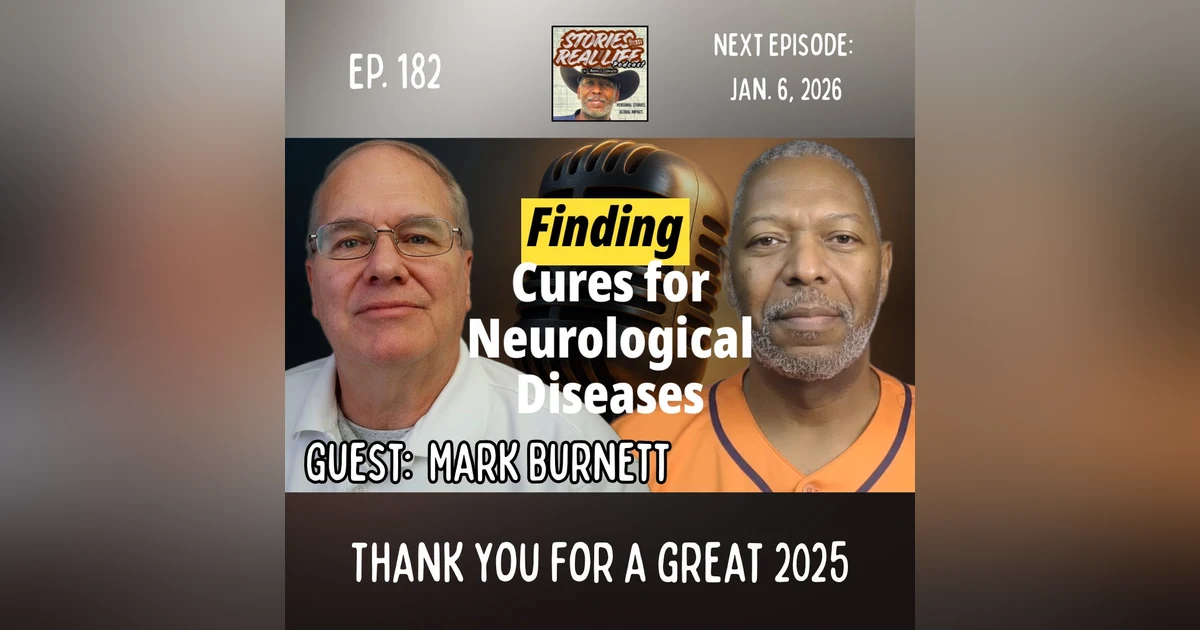
Ep. 182 - Mark Burnett: The Healing That No Doctor Prescribed

FOREVER Digital Storage - Their mission is to be the complete, permanent, and safe place where millions of families save and enjoy their memories for generations. Please support this sponsor of the podcast.
In this episode, we speak with Mark Burnett, founder of My Brain Restore™, about his personal battle with Parkinson’s and early Alzheimer’s — and the controversial path that followed.
Burnett discusses:
* His diagnoses and the moment he realized standard treatment offered no path to recovery
* Why he turned to Japanese neurological research overlooked in Western medicine
* The development of his proprietary processing method and why he believes it matters
* What he can measure, what he cannot yet prove, and where critics are right to be skeptical
* The ethical risks of self-experimentation when the alternative is slow decline
* Why FDA limitations complicate public conversations about neurological recovery
This is not a promotional interview. It is a rigorous, good-faith examination of claims, evidence, and uncertainty, designed to let listeners decide for themselves where they land.
Topics Covered:
* Parkinson’s disease
* Alzheimer’s disease
* Neurodegeneration and brain plasticity
* Supplements vs. pharmaceuticals
* Evidence standards and clinical trials
* FDA regulation and medical claims
* Patient-driven innovation
Important Disclaimer:This episode is for informational purposes only and does not constitute medical advice. Always consult licensed medical professionals before making health decisions.
Get full access to Melvin E. Edwards at storiesfromreallife.substack.com/subscribe
If you would like to support this podcast, please click on the PayPal link to make a donation today. Any amount is the perfect amount!
Thanks!
0:00 Stories from Real Life is sponsored by Forever, the digital shareable platform that preserves all of your precious memories forever. This is Melvin E. Edwards, the host of Stories from Real Life. One of the things I'm passionate about when I'm not doing this podcast is genealogy. And if you've ever researched ancestors, you begin to understand how short generations really are. That's why it's important to preserve those memories while you still have the chance. And that's where Forever comes in. Forever is the world's first permanent, shareable, digital home for all your memories. Look, your photos, videos, and family stories deserve more than temporary cloud storage. With a Forever storage account, your files are guaranteed safe and protected for your lifetime plus 100 years.
0:45 Your lifetime plus 100 years. And here's what I love. No endless monthly fees. You can make a one-time payment or break it down to 24 monthly installments and you own your storage. It's all backed by the Forever Guarantee Fund, built to preserve your legacy for generations. Check out my website, podcastreallife.com and click on Sponsors or the link in the show notes. Your memories are the stories from your real life. Forever, make sure they truly last forever. Today, on Stories from Real Life.
1:27 What if the person claiming neurological recovery isn't a doctor, a guru, or a Silicon Valley biohacker, but the patient himself? Mark Burnett was diagnosed with Parkinson's and early Alzheimer's. Instead of accepting decline, he began an unconventional search that led him to Japanese research, self-experimentation, and the creation of My Brain Restore. In this conversation, we examine what he claims, what he can prove, and where hope, science, and skepticism collide. This is not a miracle story. It's a challenge to medicine, to regulation, and to how we think about brain disease. This is Stories from Real Life with Melvin E. Edwards.
2:10 And today's story is Mark Burnett's, the healing that no doctor prescribed. You are listening to Stories from Real Life, a podcast by engaging storytellers for engaged story listeners. Here's your host, author and journalist, Melvin E. Edwards. Hello again, and welcome to another episode of Stories from Real Life. I'm your host, Melvin E. Edwards. Thank you for joining me for the podcast where our personal stories remind us how much we can learn from each other.
2:51 My guest today is Mark Burnett, who was diagnosed with Parkinson's and early Alzheimer's. Instead of preparing for decline, he went searching for research, for alternatives, and eventually for something he built himself. Today's conversation is not about certainty or cures. It's about what we do when lived experiences challenges institutional timelines and how we decide what questions are worth asking and when we're satisfied with the answers. Mark, welcome to the show. Thank you for having me. Well, I'm curious about this discussion today, so let's jump right into it. Excellent. You trace your neurological challenges back to exposure at Camp Lejeune before you were even born.
3:36 So how did that realization change your view of health and destiny? Well, at first, obviously, this was sort of a government secret. So from 1958 all the way up to 1987, I think it was. Actually, 53 to 87 was when the base was contaminated with the water. So that's an incredibly long time to keep that a secret. And unfortunately, they didn't let people know. So as I was growing up and having certain neurological problems, I didn't know what they were. My doctors didn't know what they were. No one could put anything on it. I actually had root canals in every one of my teeth because it was so sensitive, the nerves.
4:20 But I didn't understand why. And so it just led to eventually getting worse, as you always do with these type of diseases. Parkinson's, actually, most people don't know that 70% Of the people that are having Parkinson's disease that were on the base, actually, I should say this differently, Camp Lejeune has a 70% higher, according to the government, than any other American military base. So there's a huge amount of people there that are suffering from Parkinson's. It's considered a tier one disease there. And I got it during COVID. So, you know, I mean, I really got hit with it. So I started stumbling, falling into things, tripping, things you kind of put off to old age.
5:04 You know, I was getting there towards I was getting ready to retire, 65. And, you know, you kind of put it off until you realize you start falling down, hitting your head. You start really injuring yourself. And you're like, something's seriously wrong here. Wow. So what were your first thoughts and emotions when you realized both Parkinson's and Alzheimer's diagnoses at the same time? Wow. You know, I mean, let's just go for the top two, right? You know, if you're going to have it, have it the worst. You know, I kid people, I say, you know, I have Parkinson's, I fell downstairs, but at the end I have Alzheimer's, so I don't remember why. You got to have, you got to have a little humor in all this. Yeah.
5:44 It was devastating, as it is for everyone. Whether you have Parkinson's or Alzheimer's or dementia, these are devastating neurological diseases that don't come out well. My doctor did not give me a good prognosis for this going forward. This is only going to get worse. And they pointed out, once you get the Parkinson's, you're usually at about 50 percent of the dopamine producing cells in the brain already died or already gone. So at that stage, you're really kind of in way past in trouble. For me, I was literally at stage three, which is that walker level. You know, I mean, that's where I was headed next. And, you know, that's when I decided that I just couldn't stick with the medicine they were handing out that was from the 60s.
6:31 You know, that was L-DOPA discovered in India from a plant in the 1960s. And it's been the go-to medicine. But it's like giving an insulin patient or a diabetic patient insulin. You're not curing it. You're just giving them something to replace the actual problem. And that wasn't good enough for me. So at what point did you decide that conventional treatments weren't enough and that you had to either seek or create your own solutions? Well, a lot of that came from my background, number one, two backgrounds. One is I was studying to be a veterinarian. That was my big thing when I was in high school.
7:11 I actually worked for an animal hospital, helped with surgery, ran the microscope. I mean, they had me doing everything. Of course, at 14 back then, at my age, no one cared if you got bit. I really studied science well, but then at our school, we got a University of Maryland's mainframe terminal, a terminal, okay? Just one of these things where you plug the phone into, you communicate with it, you know, old thing. And I wasn't allowed to use it because I wasn't in trigonometry. You had to be in trig to get it, but I wasn't. But I knew one of the guys in trig. I said, give me the password because the guidance counselor has the same, you know, little terminal down there, right? So I went down there, asked the guidance counselor, Let her take the blanket off the things she never used and went in there and started using it and taught myself programming from the University of Maryland's mainframe.
8:00 Now, I'm probably one of the first hackers. Sorry, guys at University of Maryland's mainframe. And then I really realized you could take something from a blank screen and turn it into something real. I learned and taught myself database programming. So the combination of these things led me to, you know, my thinking, my being in retirement now, you know, reaching that 66 already and going, I got to pull out of retirement and fix my problem. You know, I mean, I got to figure it out. And that's when I really read a lot of research, got into it, and then started realizing there were other elements out there. There were other things out there that might help that were just stuck in political nightmares.
8:46 Can you describe what it was like to be your own first test subject and then the ethical considerations that came with that decision? Well, you know, when you're on your own test subject, you don't have much ethical things. You only want to get better. You kind of drop the ethics and go into, hey, you know, if it works, I'll give it a try. I mean, the supplement business is an $80 billion business out there, you know, so there's tons of things. And I had already tried everything that was recommended. I had tried it for over a year, year and a half, and nothing was working. I was only getting worse. And I said, this can't be the path. In asking my doctor, you know, the medicine, are they going to give me?
9:27 Am I going to get better? You got to know my doctor. It's a little humor level of me. He goes, no, eventually you're going to pass away from this. You're not going to survive this. Okay. And no one does, you know, not these levels of what you have. And I'm like, that's unacceptable to me. I had to go back to that blank screen in front of the computer and go, okay, I got to build from this blank screen. How do I do it? I went to research. I did find an excellent report in Japan done by a major medical university in Japan that essentially was studying a plant, not from their country, but from another country. And so it was unbiased.
10:07 And they looked at it and they realized they could cure mice that had Parkinson's, Alzheimer's, and dementia from this one plant. But they were paid for by a pharmaceutical. So their whole goal was to turn it into a drug. And their whole goal was to beat Mother Nature, take it apart, figure out what's in it, patent it, $10,000 a month's drug. They failed. So once they failed, and I realized at the end, one scientist put one sentence that I thought was amazing. He said, this should be a supplement. And I saw that and I'm like, well, why isn't it? Why can't I find it? Why isn't it out there anywhere? So it took me a long time to source it, figure out how to buy what they bought, the exact cultivator they bought.
10:53 And understand what I mean by that. Most people don't know that there are 7,500 varieties of apples. Okay, it is an enormous amount of apples. And when you go to the store, you see the five or six, but if you go to different places, you start seeing different varieties. But around the world, there are 7,500. If I told you a Granny Smith apple will cure the problem, then you're going to go buy the Granny Smith apple and you're not going to pay attention to others. This is the same with this. This fruit was called ZC5. I never heard of it. What in the world is that? And it's a little small fruit with a very small seed. And it only produces one seed per fruit. So it takes a lot to make it. But I found a way to buy that in its raw form, the way they used it on the mice.
11:39 And then I had to figure out how to produce it. and grind it here in the United States, mill it essentially, and mill it at a very cold temperature. That was really, really important to maintain all the oils and other components that the seed had, okay? And so that's what I started doing. So in January 2025, I sourced it, got it, started figuring out and became the next mouse, you know, at that stage, you know, it just, okay, let me try to figure out the dosage. Let me try to figure out where it works. And you notice something you don't notice being normal. I don't know how to explain that, but after two months of taking it and really into my third month, I noticed I wasn't banging into the table.
12:22 I was tripping less upstairs or downstairs, neither one's fun. And it was like, hey, wait a minute. I haven't fallen. I have better strength. What's going on? You know, it's just actually functioning. And as I went further down that road, I set goals for myself. I said, okay, let me start writing this down. Let me log this because things are improving. My Alzheimer's had improved. My Alzheimer's had gotten to the point. Now, that's not from Camp Lejeune. I carried the genetic marker, the PEO4 gene for Alzheimer's. And I had done a blood test for Alzheimer's. Bingo, I got it. I was in the wrong direction, wrong numbers. Yeah, okay, I get it.
13:03 But what scared me the most was driving home a road I had driven down for 20 years and literally getting lost. And I couldn't remember how to get back home. And you know, if you're a man, you do what a man does. You just keep driving, right? You don't press Google, take me home. It becomes very stubborn. So after driving around long enough, I found one of the roads that I needed to be on, got on it and went home. But it scared me to death that that happened. So the combination of that scaredness, that loss of memory, forgetting where my wallet was, forgetting why I walked into a room, but also tripping and falling.
13:44 These combinations were all coming together that I had to break away from the norm. I couldn't stay with the neurologist and everything. They were pedaling the old stuff they've been pedaling since the 60s. Giving you no real hope and understanding anything else down the road was 10 years down the road. You know, what fills the gap? You know, I could be dead by then. OK, so for me, that was not an option. So becoming a guinea pig or a mouse. seeing the logical thing to do, you know, let me see what it does. Does it convert the humans? And in June of 2025, six months after starting that, figuring out how to make it and do everything I did, I ran in the Michael J.
14:26 Fox marathon and got a medal at the end. And to me, that was the day. That was the day I said, I did. My wife didn't want me to do it. She said, you're going to fall down and break your neck. We'll just have another medical bill, you know? And I'm like, no, I think I can really do this, you know? And I did. But what was more interesting was people came up to me that were Parkinson's people at that Michael J. Fox event and said, what in the world are you taking? You know, because, you know, you ran that. You did really well. And you have stage three. And you got a medal. And they were my first buyers. They actually bought. I said, look, I don't even have a label for a bottle. I said, we don't care.
15:07 You know, go make one. You know, get whatever you got to get done. And we want to buy it. So they became the first purchases. They started using it. I continued to get better after that. And there's more to that. And I'll get into that in your next questions. You know, I mean, you just, you fight. You know, when you know you win, you win, right? That's the key. Yeah, I'm curious where this fruit grows. Zizifus, is that what it's called? Yeah, it's different ways. And some of it depends on the French pronunciation of it and the Italian, you know, sort of Latin pronunciation of it. The fruit grows all over the world, including the United States.
15:48 They grow it here, but they do not grow the right cultivator. The cultivator that worked for the mice and me was from China. And most of the time when they get the roots over here, they hybrid it. In other words, they'll stick another plant on top of that rootstock and create a whole different plant. And so that doesn't work at all. Those seeds don't function. They don't work. They're made to be sweet. They're made to be bigger, you know, like you do with hybrids, you know, that's what happens. So it really is the original cultivator. So from a standpoint, did I feel comfortable with it? Yes, this was used in Chinese medicine for 2000 years as a hot tea.
16:30 And it was used to be cooked. Well, the scientists immediately noticed that destroyed it. It didn't work at all when you do that. They tried extracts, teas, everything. No mice got better at all. Only when they were able to produce it in a very cold milled fashion and ground the raw seed is where they produce the right elements to make it work. But they couldn't figure out what they were. Not that I cared. Because when you're at my level and a lot of people out there suffering from these problems or they have genetic backgrounds in these problems, You don't care at that point. As long as it works, that's all you care about. What are the side effects?
17:12 You get a little gas. It's fiber. It's like Metamucil. You know, when you first start out, your partner might not like you, but you like it. Um, So part of that was all about, you know, understanding the side effects, too. What were they? You know, I had to try to pin those down. I invited nurses to come over that I knew. I knew a nurse. She'd write at other nurses. They all came over. I sort of had my own focus groups get involved to say, you know, this is good. This is bad. You know, whatever. But everybody was really for it. And they were like, this could be enormous in nursing homes. You know, this could be enormous for caregivers. You know, I mean, everybody had their own opinion, but they were all right in the end.
17:55 You know, yes, it could be. Have you ever reached out to Michael J. Fox with this option? I have reached out to Michael J. Fox, but getting to Michael J. Fox, essentially his wife, who runs the organization, which people may not be aware of, you know, getting to the actual people past the people that are essentially, you know, trying to raise funds versus, you know, trying to be on the other end. big drug companies, a lot of money to try to develop something when in reality, maybe they should be looking at more simpler effects. And I'm a for-profit company, not a nonprofit. So that affects them too a little bit as to how they get.
18:35 However, the Michael J. Fox Association has reached out at me on doing some additional experiments, which we're talking about. But more importantly, they've asked me to speak at Congress. And we're in final talks about that. So they are involved and I'm involved with them. But obviously we'd like to get it to some of those key players, you know, that are suffering the worst and see how they do. That would be fantastic. But we just opened up international shipping because we were getting a lot of calls. And literally on Christmas Day, I had three international shipments come through. One to Norway, one to Australia, one to the UK. So people now are buying around the world.
19:16 Nothing I had planned on doing right away. That's a lot of work. You know, they're trying to do that. But besides my U.S. group and Canadian group, you know, it's sort of expanded pretty quickly. There's a lot of celebrities out there who do have Alzheimer's and do have dementia issues and Parkinson's. So we're trying to reach out to them. We would love them to get involved in it. I think that would be great. Have any researchers reached out to you about clinical trials? No. And partly there's a huge reason for that. And it's no different than the Japanese. The Japanese understandably that scientists in the end knew what was going to happen. They knew the drug company would drop it because they couldn't figure out how to patent it.
20:00 So once they couldn't figure out how to patent it, it was worthless still. And that's why he put that one sentence in there, this should be a supplement, you know, because it's natural. We're not having problems with it. The mice had no issues, but they got better. And they dissected the mice. I didn't sign up for that part. But they dissected the mice and they essentially found that everything in there that causes Alzheimer's, Parkinson's, dementia, these tangles and all these other elements in here, the amyloid plaques were gone. Well, then became to me like, well, where'd they go to? They never did that experiment. And then that's when I found out that in 2012, which is very recent in the medical world, 2012, Norwegian scientists actually found that there's a different system in the brain called the glymphatic system, like lymphatic.
20:50 But the glymphatic clears all those tendrils out and clears the brain of that. And if it's stuck, are jammed up, it won't work. Now it started to make sense to me. The pictures of the puzzle came together. Where did everything go in the mice? It had to go through that system because that's the only way that it works. So it makes sense that the product is clearing the glymphatic system. Now, how could I prove that? Because I'm not going to sign up for that dissection part. Well, there was this test I took in 2023 called the amyloid beta 4240 test. That test shows the ratio in the blood of amyloid beta plaques that come from the brain.
21:33 If they're stuck, the ratio is wrong. Okay, it's in the opposite direction of where you need it to be. So I asked my doctor, could I retake that test? Because I've been taking my brain restore. I've been taking the product. I'm better. I remember things now. I don't fall down. So I know it's working on both things through the test. No, I won't do it. I'm like, why? He goes, because no one reverses that. I'm not going to get in trouble with the insurance company doing a test that makes no sense to do again. So I went to another doctor, same answer, Googled it, worse answer, like, no, it cannot be reversed. It's impossible. You can't do it.
22:13 Go away. You know, kind of attitude. Even AI was like, get out of here. Okay. Ask me something. That's bad when you're rejected by artificial intelligence. Like what just happened? But I, you know, I called 10 doctors, you know, online and I finally got one that said, I'll do it. I don't mind. I think your idea is smart. You know, I mean, it makes sense. Why don't we just check it? And I said, I'll pay for it out of my pocket if I have to. But I want the same test from the same lab the same way. I don't want anything different. OK, so we went back to Quest Diagnostics, well-known group. They did the test. and I improved the score by 10%, I changed the ratio.
22:54 And that's not possible, but it is possible. And that's my point. That was the way to me to prove that that glymphatic system was the only thing that could dump that back into the blood where the liver breaks it down and disposes of it. And that's what's supposed to happen, but not happening in people with neurological conditions. Bingo. And again, this is the kind of stuff I do. I don't quit everything. If there's another test rolling around, Michael J. Fox group or the Alzheimer's group, let me take it. I'm right there. How do you thumb your nose at open AI? Well, I see the mistakes it makes being a former programmer. Yeah.
23:35 You can tell when a hand's going through a table or someone has six fingers or something like that. It's got some, what they call an AI, hallucinations. And they actually have a term for it. I've seen that work. you kind of have to work around hallucinations. And one way you do that, you run the same script through different AI programs and see if you get a consensus, you know, between the two. And then it just comes down to, okay, that sort of made sense. Now let me sort of put that to practice. You know, how do I now quantify that in an experiment that I can do? So that's kind of how I do it and deal with it. So for... what safety guidance do you give to new users?
24:17 Sure. Well, if they, you know, each person is a little different here because we're dealing with different neurological diseases that are going to have different sort of, you know, returns. For instance, let's just take Parkinson's. Okay. For myself, And the other people taking My Brain Restore that they get at mybrainrestore.com or they can get on Amazon. We just got on Amazon. We're essentially now looking at it from a standpoint of giving them sort of an outline list of what they should look for. Number one, for Parkinson's people, it's going to be greater strength first. A couple of my people that are buying the product are actual retired doctors, which I thought was weird, but I kept seeing these DRs in front of names when they were ordered and finally got, you know, called one of them and said, you know, what do you do?
25:02 And he'd go, oh, I'm a retired neurosurgeon. I'm like, what? OK, I'm at the top of the list here. Then, dude, why are you taking? Because I know nothing else works. I know the world. This is drug companies pushing things. But he said, I noticed strength right away. I could do maybe three reps with some weights and I'm done. Now I can do 10. And then another doctor I talked to, a woman, very nice woman. She said, I always walk down this nature trail behind my house and I had to hold on to my husband's hand. And I noticed that I felt after taking this for three months, I felt like something was a little different and I let go of his hand. And I walked all the way back home without holding on to his hand once. I didn't lose my balance.
25:43 She goes, I always lost my balance. And she goes, I know it's working. And one day she got a little terrified because we had sent it out and she didn't get it right away. And she had to go somewhere. She goes, can you overnight it to me again? You know, these people are serious once you find something that works. And as one person put it, look, if you can improve people by 10 percent, just 10 percent, not cure them, but they'll be so happy taking it, you know. And that's the element that we really look for. For me, it's a huge turnaround. For other people, it's huge, way more than 10 percent. These are enormous turnarounds. For people with dementia and things of that order, and I would say Alzheimer's, for me, I think that turnaround was a little faster than taking that six months to a year time period that I was kind of involved for the Parkinson's.
26:36 I started remembering things and saying things sharply. So what we did, we actually get this. I recommend to all my Alzheimer's people, go buy this game, okay? My camera's chasing me. It's called the matching game for those of you who are listening. Yeah. Yeah. The matching game, which, you know, you do these little animals and you get a pair of animals each and you try to match it together. OK, so I felt I was pretty sharp with it. My wife is 15 years younger than me. She's a lot sharper than I am. And I sat down with her. I bought this game and I said, you know, you know my Alzheimer's level, but let's play this game. Thirty six animals, all thirty six. Let's put them on the table. And I played this little kids game.
27:18 And she goes, I'll beat you. I really don't want to embarrass you. You know, you know, whatever. Let's play the game. I played the game and I beat her so bad she won't play anymore. She's like. So without getting political here, is that something like what the president has been doing at Walter Reed? I think, you know, my clue on that is it's vascular dementia. It just reminds me of because he has the hand blade thing, which there's been plenty of persons who don't have this kind of problem. They shake plenty of hands. So in vascular dementia, you know, you have blood vessels here that are causing problems. And it does seem like that.
27:59 you know is what he's dealing with seeing other dementia patients watching my friend who had parkinson's and dementia actually pass away from it and they gave him really rough drugs some drugs that had the most serious side effects they're horrible horrible stuff but he didn't get any better and eventually he died from it he would argue with the mirror all day long he would just go rambling off about stuff and he can remember older things but when you gave him something new He couldn't remember. And his caregiver, and I'll give this advice, his caregiver, whether and more women suffer from Alzheimer's than men, you know, statistically. When you're doing caregiving, don't say, is this picture Bob?
28:40 Is my name Betty? OK, do not do that. And I saw caregivers do this. You know, as I studied it, I saw this person do it. I said, no, ask, what is your name? Who is that on TV? You name it. Because the dementia person will say most of the time, yes. Yeah, you're Betty. It's not your real name. I would do that to him. I'd trick him. I'd just say, my name's Frank. And he'd go, yeah. I'm like, It's not right, okay? He's just agreeing, okay? Because he doesn't want to show that. People are embarrassed by all of this, okay? This is not something people are not embarrassed about. People go hide in corners with these kinds of diseases. I don't want them to do that.
29:20 When I'm out now, people do not know I have Alzheimer's. People cannot pick I have Parkinson's. You've seen me on here right now, okay? I mean, I'm level three. I shouldn't be able to do all this, but I can. And that turnaround is important. And I think for dementia... people, but also the caregivers. It's very, very important. We have a lot of caregivers that are coming to the website. You know, can I give this to my husband? Can I give this to my wife? What are the side effects? Things like that. And then they turn around and order. But like I tell them, you got to stick with it. It is not something that repairs itself right away. Probably took you 15 years to get Parkinson's to where it showed up. Alzheimer's can show up at any point.
30:02 These things take time and they take just as much time to fix. So you can't rush it. Just be, you know, stick with the program. You know, that's the main thing. And you don't have to do any exercise. I'm a couch potato. I drink these nutritious things called cherry Coke. Okay. I don't do anything right. But the point being is you don't need to do all those things. Neither did the mice. Okay. to make this work. And that's important because a lot of people give up exercise. A lot of people will give up diets. You know, that's really hard to stay on. But we're talking about something that's a simple powder. You mix in with yogurt or ice cream, anything cold, Okay.
30:42 Pudding's good. And then you take it that way. That also works for caregivers. Because I saw my dementia guy, my buddy, have dementia. And if he didn't like what you handed him, he'd throw it at you. He's like, get this out of me. I don't know what this is. This tastes terrible. So you have to be, as a caregiver, you have to put things in. things they like or a flavor they like or sweeten it up a little bit more, whatever is necessary, this product will mix with just about any cold ingredient. And that helps the caregiver a lot because they have a lot of problems overcoming what a person will eat or they won't eat. Okay. So without unbiased clinical trials that are replicatable, how do you measure hope versus evidence?
31:26 Sure. Well, I mean, hope is one thing. I certainly had hoped this would work, but then I had evidence. So you start with hope. And every time I did programming and look at a blank screen on a computer, I hope I can figure out how to turn in this, you know, from that blank screen. But to do that in programming, you have to look at vision ahead. Where am I going with this? Where do I want to be? Okay. And my time in January was not that I wanted to help the rest of the world or I wanted to come out with a product. I was greedy. I wanted to fix me. I mean, I want it to fix me. That was the key element. How do I take care of these two terrible diseases?
32:08 And so I went from hope in looking to finding research to being able to reproduce that research, to see if it would go from mouse to man, and it did, okay? And realizing that once I had it down and I had other people now that were buying it, and I couldn't believe that 10% of those original buyers were doctors, but that gave me a great opportunity to speak to some of them that would talk. you know, and reach out to them. And they're telling me the same thing. I realized that these are heavy duty people that are retired, that huge medical backgrounds that are turning to my product and buying it.
32:48 Why? And I asked why, why you do that? Because there's nothing else. I don't have anything else I can pull out of the medicine cabinet that's going to do this. And the research makes sense. It's logical. But it also makes sense why they didn't go to make it a $10,000 a month drug. They couldn't. So... It's horrible that those things get abandoned, but I'm sure they get abandoned all the time. I'm sure there's tons of things out there we just don't come across. I just had the tenacity I wouldn't give up, you know, and I fell into that report. And I think it was the Michael J. Fox group or one of the other Parkinson's groups that actually had mentioned the article. but only gave it like a couple paragraphs of work.
33:31 But I traced it down and got the actual scientific study. So I was able to get the exact study from the scientist. I had to read it four times to understand half the words in it. But at the end, it was like, wow, how can one thing cure for mice? Three different neurological diseases. It was like that aha moment. It has to be a common pathway. And then when I put all that together, I realized what that was. And I think other people were realizing what it was and why we're getting international orders and stuff like that. People are paying a lot to ship this product internationally. We ship it free in the United States. We ship it priority mail free.
34:11 We follow Amazon's guideline there for shipping. Everybody's a prime member here. Without paying anything. So, you know, and I wanted to document everything. So I created a book called My Journey. The My Journey book, the people can go to mybrainrestore.com. They can click on the FAQ and you'll see free PDFs. The latest 2026 version that's not on Amazon yet is right there. We just got done completing it. They can download it for free and send it to as many as they want for free. I'm not trying to make money on a book. My book is to tell my journey from Camp Lejeune to where I am now, being retired, and then having to face two neurological diseases and the ultimate thing of, wow, I may not be able to drive soon.
34:58 My freedoms may be all taken away from me. I may be a burden on my family. And sometimes family doesn't want to deal with you if you're that sick. But everyone knows someone with Alzheimer's, Parkinson's or dementia. They know somebody, a family member or whatever, or it runs in the family and they don't want to get it. So they want to use it as a preventive. You know, all these things started to click together. And that's how I made it from essentially a mouse study into something with way more than hope. And I believe and the reason I can speak about it because in the book I'm speaking about myself.
35:41 But eventually on Amazon, we'll start seeing those five star reviews. We'll start seeing these doctors jump in once they have enough time. Right now it's too young. We just put it up there. But, you know, they'll all start coming in. So given your experience, what are your thoughts on the limitations of conventional treatments? Sure. Well, unfortunately, right now, the U.S. thinking is to repurpose cancer drugs to fight Parkinson's. And there's a whole thing going on right now to repurpose them. Sometimes when you repurpose a drug, it's not always the best idea. It just means I don't have time to develop a new one that actually works. I think this might work because of some models.
36:21 It might function a little bit. The same thing we're doing in the U.S., the U.K. did. And the U.K. came back and said, those cancer drugs out there that they're using for this are way too expensive. They're not simple. They require clinical work. They require constant MRIs. And the cost to ratio of what it's worth, and it's only improving 35%, not worth it. We're not going to pay for it. And so the UK decided to abandon that because the numbers for that particular drug or the combination of two cancer drugs that have to be done by infusion in a hospital or a hospital-style setting is $100,000 for the medicine.
37:06 It is $150,000 for all the clinical stuff because it's a three-year infusion program you have to go through, and you get 35% better. It's, you know, you're talking a quarter million dollars. So I tell people, you can go down that route or you can go down different routes. There are other routes such as electrical implants in the brain that can stop tremors and things like that. But if your battery goes dead, the tremors come back in a second. So it's only blocking it. Again, these are more supportive blocking things and doing other things. They might even maybe break up the tendrils in the brain and amyloid plaques.
37:46 But if they don't have a way to get out, it's sort of like unclogging your sink with the plunger and okay, all the stuff's now at the top, but it's still clogged. And none of the stuff went anywhere I needed to go. So I think we have a different play in the game in that regard. So I see the other things that are out there as, you know, possibilities. But you have to be so severely bad at that point for them to put electrical implants in. Now, I do have people who have electrical implants in the block that I have other people taking other medicines, but they're also ordering ours. And that's interesting, but it's a point of like, well, that stopped my tremors, but I still fall down and I can't get to sleep.
38:30 So it didn't fix any of the other elements. No, it didn't. Okay, then of course, you know, you really want to fix all the elements. Not just one, because it doesn't mean down the road you still aren't going to pass away from this. Because if you trip and fall, that's a big problem with Parkinson's people. They trip and fall and hurt themselves. I mean, they hurt themselves severely. Michael J. Fox, as you mentioned, I mean, he's broken so many bones in his body. It's crazy. And he got Parkinson's when he was 29. Most people don't know that. He was very early diagnosed. So a couple of times you've mentioned your website, mybrainrestore.com. So what are your hopes for this as an outcome?
39:11 Wow. You know, it has changed from January 1st when I started taking it. And now I'll be into my first year. It's expanded into people asking me, since it worked on mice, will it work on my dog? My dog has dementia. My cat has dementia. I'm like, Probably, you know, so there's that. Some people have called about, a lot of people call it about preventive. In other words, it runs in my family. You know, my grandfather had Parkinson's or my grandfather had Alzheimer's or dementia. I don't want to get it. Can we use it as a preventive? In the mouse studies, fortunately, very fortunately. They took the control mice and they gave them the same ingredient.
39:51 So after they got done doing all the other mice, they gave it to the control group who had nothing. And their ability to run the mazes and do the tests they did improved 20%. So they said, yes, this should be a prevent. So we have two formulas, 2X, which I take, which is two times the dose. And then the preventing formula that is just for people that want to keep this from ever appearing. you know, do everything they can to keep the gateway clear and things like that, that climatic system, you know, cleared out. Better not to get it than to get it, okay? But, yeah. But I think long-term, it is also... I really, and it's going to be hard to do this, but to get it in the nursing homes and to other places like that where we're losing nurses.
40:39 We have a shortage of nurses in the United States, yet we have a baby boomer, silver tsunami of people retiring. So those two combinations don't go well together. That gives you a ratio of 10 patients to one nurse. OK, and if this would come in and help 20 percent, think how much easier that would be on the nurses to go. I don't have to see Bob. He knows how to deal with that problem now on his own. You know, he's getting better. He can't he's not going to necessarily get out of the facility. But if his family signs up and say, I'd like him to be part of this and the nursing group would get involved and let's try it with 10 patients or 20 patients. Let's give it to them. Let's write everything down. Let's quantify it. We want them to. We want to help them.
41:20 quantify it. Because if they start seeing improvements, then they know it's working and they know who it's working on and how it's working and the dosage levels. They become sort of our clinical trials, but also we know we're in trouble there. We know that nursing homes are overloaded. We know that people die needlessly. And I can tell you, I know hospice nurses personally. I know them. And they say, I go to people's homes and the partner will turn to me and say, is there anything you can give my partner, To end his life or her life. And the hospice nurse is like, no way. I can't do anything like it. Are you crazy? Don't ask me that question again. You know, that's not what I can get involved in.
42:02 But that's a level of desperation that people are at. Like, I don't want to see a person suffer. This is ridiculous. This is not the person I know. They don't know me. So to me, if I could turn that around so that person who has dementia or Alzheimer's could look at the TV and go, yeah. That's Bruce Willis. He has dementia also. If I could get that person to say that and do that and know you didn't prompt him and say, is that Bruce Willis? Don't ask that question. Ask him to identify it. Bring out old photos. Who's this? Who's this right here? Do those things. Those are the tests. They're very simplistic. Do the memory test. I get it.
42:43 Very simplistic things you can do as a caregiver. But if your caregiver component becomes easier to do, then that's taking the strain off you. Because caregivers, I mean, it's depressing. It's horrible to go through. You see someone you know who doesn't know you. And if you can improve that and change that, that to me is huge. That to me would be huge. That's where I want to get to. So your site notes that FDA regulations prevent medical claims. So how do you balance sharing personal results with that kind of compliance? Yeah, sure. And it's definitely, you know, the tussling. Part of it is the book.
43:24 The book is about my journey. It's not about the product per se. You know, it's about my journey. It's about coming from Camp Lejeune. It's about all the medical tests I did. I post all my medical tests. OK, so for me, I can say those kind of things. For other people, I have to say the FDA says, no, this is not a cure. No, you know, it doesn't treat anything specific or anything like that. But I can talk about what I have. And I can talk about what other people have talked to me about because they're putting in their personal words as to what they're doing. So I think if you look at Amazon, you'll notice that when we talk about supplements, it is the people doing the reviews that can say anything they want to say.
44:07 And so we're just waiting to get to that point where these people jump in and start giving feedback because they're not under FDA rules in any way. And the FDA rules basically just say we can't make necessarily the claim. Are we on the gray side? Probably. But then again, on the other side of that fence, you know, I'm not sure there's any FDA employees left. Not to mention we're not doing any research on this, which we should be doing. You know, that's all going overseas. You know, we really have to look, you know, into the supplement market is growing. We have an increase in the cost of health care that could be astronomical. We don't even know what it's going to be yet.
44:49 I've heard some people say the new numbers they're getting went from five hundred dollars a month for their family or something like that to medical to two thousand a month. How do you pay for that? You know, we're going to have to look more towards supplements. We're going to have to look more towards, you know, organic cures, if you will, to try to solve some of these problems because we're not going to be able to afford anything that comes out. Some of the newer drugs coming out, I just heard one that was it was a one time thing to treat one disease. It was on the news last night. Three million dollars for one dose. Three million. There isn't a drug. As a matter of fact, a person pointed out there hasn't been a drug that's come out new that's under $45,000 in the last couple of months.
45:33 They're outrageous. And of course, drug companies are going to drop this. They're not going to get involved. So it puts us in a bad position in that we're kind of on our own. We have to think through these things. How do we deal with it? And I think probably my banker put it best. He works in an area where there's a lot of people with Alzheimer's and dementia that comes in. He has to help them with their accounts and everything. And he says, you know, if you could just help these people a little, just a little, you know, it would be great for them, for me and everyone else that's around them. And so the fact that we know that it functions on me and it functions on the mice, I think we have strong scientific evidence that it went from mice studies to human.
46:20 The blood work that I did is fantastic because that just shouldn't happen. I mean, that should have never happened at all, but it did. So I encourage everybody to get that blood work done. It's cheap. It's simple. It's just blood work. Okay. You know, monitor yourself because you're going to become the advocates for this. don't look for and i hate to say this even though i work with them michael j fox group or the parkinson's group or the alzheimer's group because their job is going to raise money and if this works honestly what's going to happen are they going to be able to raise money you kind of put them on the job they're in a duality here where it's like yeah we really don't want to hear too much about your product we need to raise more money for these guys to do millions of dollars worth of research you know it's like Well, what's wrong with this?
47:07 You know, it might work. Definitely in some stages I've gotten a cold shoulder on that. But I understand, you know, that's their jobs. It's to raise funds for studies. But if you have something that goes beyond a study, what do you do? It might cut down in your workforce. And I'm all for it. I'm sorry. Even Michael J. Fox just recently said, if I could close this institution, this foundation, because we found a cure, I'd do it in a heartbeat. And he's right. All right. So I just have a couple of questions left as we wind down the conversation here. So how do you address skeptics? Sure. Well, I think the biggest skeptics are not the users that are facing this.
47:48 That's definitely not. Everybody that I talk to praises me for doing groundbreaking research and getting involved in this, finding the report. Everyone who comes to mybrainrestore.com is very supportive, okay? What's not supportive is the other side of the fence, where we look at people like nursing homes and things like that, where they're like, Well, is this FDA approved? You know, OK, look, your doctor recommends vitamins. He recommends minerals. Where does he tell you to get them? I'll just go down to Costco or the drugstore and buy them. Those are not FDA approved. Nothing you buy over the shelf is FDA approved.
48:29 OK, that's not the way it works. The FDA stuff that's approved is behind the counter. And that's where you need the money, okay? And that's the difference. And some things go off FDA approval and go on the counter. You know, many drugs have moved over into that direction, okay? So we're at that stage where we have something that has moved forward quickly. The skeptics are there, but I would say... You know, I'm not too worried about that. I mean, they need to try it. You know, the side effects are not really there. You know, it doesn't have side effects like a big drug you would buy, like my friend took that was horrible, horrible side effects. You know, it doesn't have that.
49:09 So they just have to stick with it. They can see for themselves, you know, whether it's going to work or not. But they've got to sign up for six months. It's not going to work in a month. It's not going to work in two months. It's going to take a while. But they need their caregiver and need themselves to be able to be the judge. You know, is this working? You know, how's it working? Everyone's going to be different on how it works. But there's always going to be skeptics. There's skeptics in everything you do. Oh, my God, how many skeptics are there in AI right now? That's like Pacific City. But for me being a computer person, there are advantages to it. Huge. But there are also huge disadvantages to it. I mean, it's going to make mistakes. It's going to lock your bank account one day because it thinks you did something wrong.
49:52 It will make mistakes. And that's the problem with some things like that. This is something grounded in science. 2,000 years of tradition of being safe. And when you think about it, what skeptical thing you want out of it, you know, if this new way of making the same product that's 2,000 years old works, why not give it a go? And that's where we want people to go. But give it a go. You got to stick with it six months. It'll be six months and run the Michael J. Fox thing. Now, I never ran in my life. I don't jog. I don't run. I bought my first good pair of sneakers to do that before I was wearing steel plated shoes because I kept hurting myself.
50:35 All right. So for a final question today, what do you say to someone suffering from Alzheimer's or Parkinson's or someone caring for someone who is suffering from those diseases? Well, I think you have to look at all your options that you have. The most common thing a neurologist is going to give you for Parkinson's is L-DOPA or some form of L-DOPA. For Alzheimer's, they're going to recommend maybe some vast treatment that might be quite expensive or difficult or have serious side effects. I would compare the side effect problems to what we have. And our cost range for the product is very reasonable considering what you would pay for these other drugs and other treatments.
51:20 So I would say give it six months, give it a year. We have subscription basis to make it simple our product mixes in with yogurt and pudding and things like that so it's very very simplistic to take try it use it first before you go to those extra levels and if you start improving you'll probably be an argument with your neurologist because they're not going to be familiar with it trust me my neurologist had no clue what i was doing my neurologist did not want to order other tests I fought them all the way. But you got to understand they have seven minutes to stay with you. They have other people in other offices. And we all know this, that seven minutes goes by. You've got an additional question. The doctor's like, just take what I'm giving you.
52:01 Bye bye. I got to go. You know, the nurse will take care of you from here. All of us have been through that. we're not that way we have a phone number on our site people call us and ask us questions we don't answer by ai you either get us or you get a message and we call you back we answer it seven days a week we have email we have everything we're setting up a form we're doing everything we can to communicate with our people so unlike any other supplement company out there okay there's two factors here number one we're wide open to talking to them. But number two, how many supplement companies where the person who's come out with a supplement actually has the disease? They're just big drunk. I don't know with any.
52:43 Exactly. But we can guess. There are companies that come out with an array of different supplements. I have one supplement. I'm not planning on coming out with another one. It works. Why do I need another one? This works. I'll be busy forever. There's supposed to be like around the world, like 80 million people suffering from these three different diseases. We'll be around a while. Okay. Well, we've been around a while today for this conversation, but this is where we're going to end it today. So our guest today has been Mark Burnett. Mark, thanks so much for being here and sharing your experiences with us. Oh, thank you. I appreciate that. And I hope everyone in the audience, if you do nothing else, just go to the website, download the book for free.
53:26 It's 80 pages. It's a good read. You'll get to understand my journey and more about what we've talked about. And I think that's good for everybody to read. They should. It's free. You can't beat that. Can't beat that. And I'll put the link in the show notes. Perfect. Dan, thank you for being here. Thank you for having me. So I just want to tell the audience, you don't have to agree with Mark Burnett to take his conversation seriously. You can decide for yourself where curiosity ends and your restoration begins. And this is the last episode for 2025. So we'll wish everyone a happy new year and hope that next year brings you health and wealth and whatever you desire.
54:06 I look forward to being back with you in January. So this is Stories from Real Life. Until next time, don't forget to shine your light wherever you go. Thank you for tuning in to this episode of Stories from Real Life. Don't forget to subscribe and share. Let's meet right here every Tuesday and Friday. See you then.


