
 Spotify

 Apple Podcasts

 Goodpods

 Audacy

 iHeartRadio

 Youtube Music

 Amazon Music

 Audible

 Podchaser

 YouTube

 Castbox
 RSS Feed
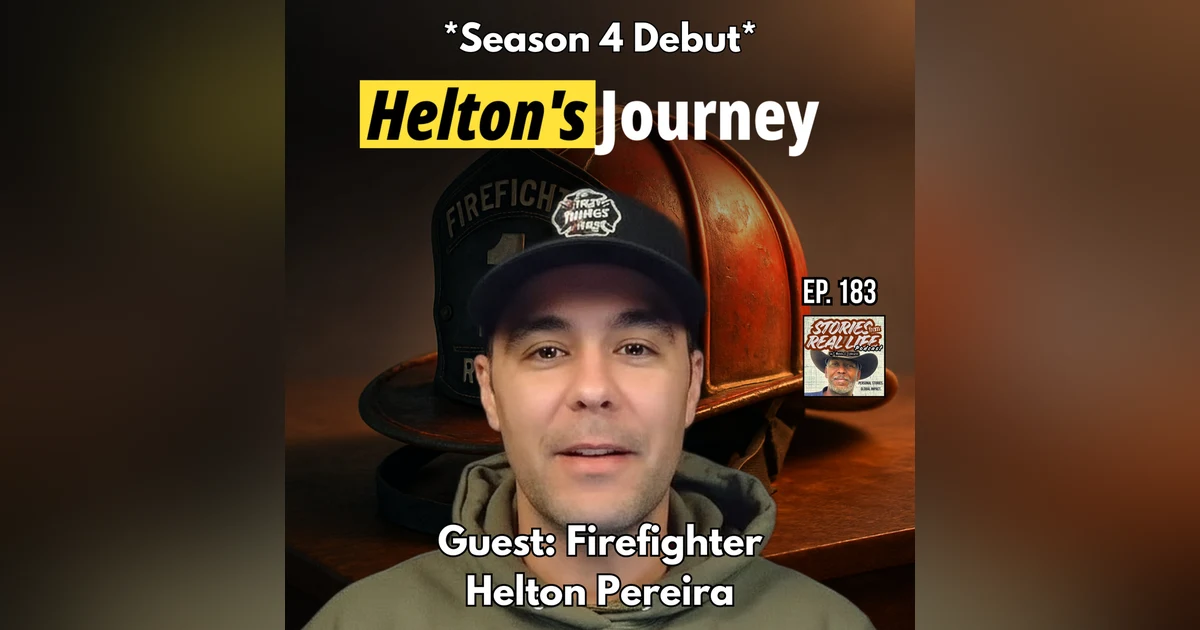
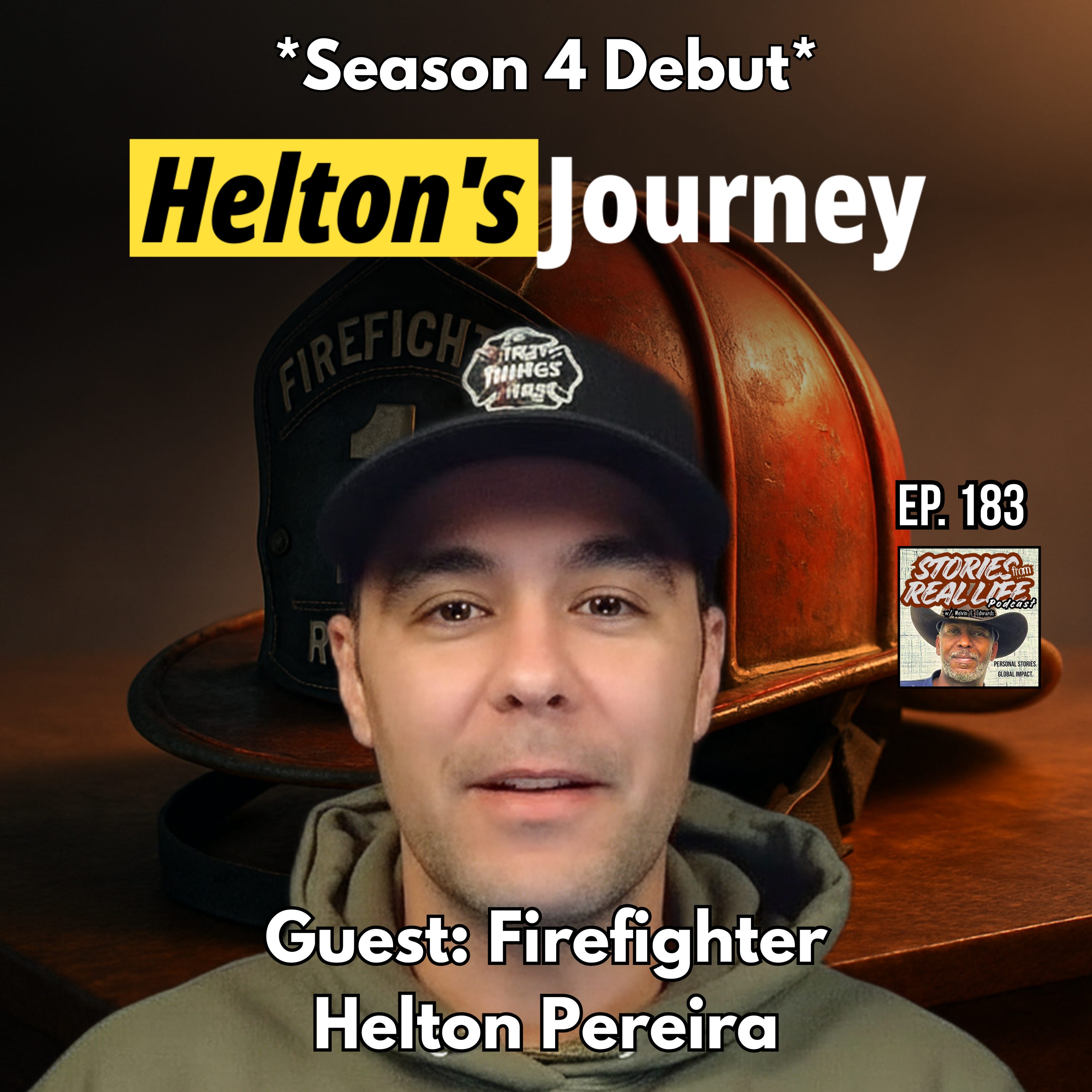
Ep. 183 - Helton Pereira: Fire, Faith, Family, and the Fight for Purpose
FOREVER Digital Storage - Their mission is to be the complete, permanent, and safe place where millions of families save and enjoy their memories for generations. Please support this sponsor of the podcast.
Episode Summary:
Today’s guest is Lt. Helton Pereira — born in Rio de Janeiro, immigrant at 15, pre-med student turned EMT, firefighter, paramedic, and now Lieutenant in the U.S. Fire Service. He joins us to share how one fire extinguisher instructor changed his life, why firefighters lose love for the job, and why putting life in the right order — Faith, Family, Fitness, Firefighting — is the only way to survive the weight of the fire service and still love it.
What We Cover– Immigration and identity– Becoming an EMT and entering fire service by accident– Trauma, loss, and nearly burning out– Protecting marriage and kids while serving a demanding career– Creating a movement and writing a book– Why mentorship matters more than gear or tactics
Links– The First Things First – Book & Resources: www.TheFirstThingsFirst.com
Get full access to Melvin E. Edwards at storiesfromreallife.substack.com/subscribe
If you would like to support this podcast, please click on the PayPal link to make a donation today. Any amount is the perfect amount!
Thanks!
0:00 Stories from Real Life is sponsored by Forever, the digital shareable platform that preserves all of your precious memories forever. This is Melvin E. Edwards, the host of Stories from Real Life. One of the things I'm passionate about when I'm not doing this podcast is genealogy. And if you've ever researched ancestors, you begin to understand how short generations really are. That's why it's important to preserve those memories while you still have the chance. And that's where Forever comes in. forever is the world's first permanent shareable digital home for all your memories look your photos videos and family stories deserve more than temporary cloud storage with a forever storage account your files are guaranteed safe and protected for your lifetime plus 100 years your lifetime plus 100 years And here's what I love.
0:51 No endless monthly fees. You can make a one-time payment or break it down to 24 monthly installments and you own your storage. It's all backed by the Forever Guarantee Fund, built to preserve your legacy for generations. Check out my website, podcastreallife.com and click on Sponsors or the link in the show notes. Your memories are the stories from your real life. Forever, make sure they truly last forever. Welcome to the premiere episode of season four of Stories from Real Life with Melvin E. Edwards. You don't wake up one day in love with the job.
1:33 You choose the job every day. Today, we're sitting down with someone who learned that the hard way. Born and raised in Rio de Janeiro, Helton Pereira came to the US at 15, intending to go to medical school. Instead, one fire extinguisher class changed the course of his life. He became an EMT, then a firefighter, a paramedic, a lieutenant, and eventually, a voice reshaping how firefighters think about faith, family, fitness, and the job. This is the story of a man who refuses to let the fire service become his only identity and wants the world to know, if you want to love the job, you must put the first things first.
2:17 This is Stories from Real Life with Melvin E. Edwards. And today's story is Helton Pereira's. Fire, faith, family, and the fight for purpose. You are listening to Stories from Real Life, a podcast by engaging storytellers for engaged story listeners. Here's your host, author and journalist, Melvin E. Edwards. Hello again, and welcome to another episode of Stories from Real Life.
2:58 I'm your host, Melvin E. Edwards. Thank you for joining me for the podcast where our personal stories remind us how much we can learn from each other. Today's guest is Helton Pereira, who was born in Rio de Janeiro, raised by his faith, and now he's a lieutenant in the U.S. Fire Service. His story didn't begin with a fire hose. It began with pre-med dreams, an EMT class, and one instructor who changed everything. Helton, I'm honored to have you as a guest today. Thank you, Mel. Thanks for having me. And thanks for giving me the time to share a little bit of my story. All right, here we go. We're going to start with your early part of your life. So do you remember the moment you truly realized you were leaving Brazil for good, not just as a vacation and starting a new life in a new country?
3:40 Yeah, so I moved here as a young boy. You know, my parents, my mom was an English teacher. She always had the dream of one day moving to America and living a life here. So I have to say I didn't really have much choice in the matter of moving to America. But when my parents told me that this dream that they had was going to be happening, I was obviously really excited as a child that moving, not only moving to a new place, but moving to a new country. And obviously, you know, a country where the dreams come through. So for me as a 14-year-old then, it was a really exciting time in my life to move into a new place, to a new country, get to meet new people.
4:24 And, you know, it was a little bit scary, obviously. As a boy, I didn't really know what to expect. I didn't really know what the culture would be like or would I find new friends? Would I fit in school? Would I find a new church? So it was exciting and scary at the same time, but I guess I would say it was more exciting than anything. All right. You were 14, 15 years old, so that's high school age. That is a... Dramatic time for a big change like that. So what culture shock hit you the hardest when you started high school in the United States? Yeah, so I would say not speaking the language fluently then. As I said, my mom was an English teacher.
5:05 So from an early age, she taught us English. You know, I took English classes, you know, as early I would say as six or eight years old, which was a little bit different than, you know, the Spanish that you would learn here in school. So it was my mom teaching us from the books that she would teach adults. So what I lacked, it was just the conversational part of the language. So... When I came into high school, that was in 2001, it was just hard to kind of, you know, develop the friendships at first because I didn't speak English very well. So one of the things that happened, I went into ESL classes, which is English as a second language.
5:51 So I was in those classes with a lot of other foreign kids who were, you know, coming in and entering the school system. So they were, you know... Latinos, there were Asians, there were Middle Eastern students also. As a 14-year-old, I had no idea what a melting pot the United States was. But coming into high school... being put in quite literally a melting pot of people that were recently into the country from all different parts of the world. That was a really cool time in my life where I got to not only learn about the American culture, but I got to learn about so many cultures from friends who were Pakistani, from Honduras, Nicaragua.
6:35 South Korea. And so it was a really cool way, I would say, to kind of enter into the American culture. And obviously, I had plenty of friends, neighbors and friends from the football team, friends from all my other classes that I got to see, I guess, the best of both worlds of what the American culture was. And as you said, coming into high school, which already the transition for most kids from middle school to high school is really big. For me, obviously, it was also a big transition. I was actually leaving a very structured, I actually started high school in Brazil. I attended high school for about two to three months. And the high school that I was in was a paramilitary high school.
7:19 It was a prep school for people who would be, I would say, kind of like an ROTC high school to prep students to enter into military academies. So I came from that very regimented high school for a few months, moved here and started high school, you know, in this kind of, you know, very different environment. So I would say that the culture shock was definitely very big, you know, because I'm trying to learn or I should say I'm trying to master English. But at the same time, I'm in a classroom with people from all over the world, who are also trying to learn and also trying to master the language.
8:04 And so it made it for a very, very interesting, you know, entrance into high school. And, you know, not to mention, obviously, you know, as a young kid, you're still trying to make friends, trying to find who are the cool kids that you want to hang out with. You know, I joined the football team. Yeah. And one of the funny things that happened is people thought that I, because I didn't know much, they assumed that I thought that I was entering the football team as football soccer. So I was like, no, no, I really want to join the football team. And so because of that, because they assumed that I was looking into playing soccer, they made me the kicker.
8:46 So I played football for... you know, two years in high school. Um, and then since they only let me be the kicker, because I, in reality, I didn't really know much about the game. I didn't know the, the, the rules. I just know you had to hit people and try to tackle people. Uh, so I just got tired of, of being the kicker, you know, it's like, Hey, if I'm going to kick a football, I might as well just kick the soccer ball. So I quit after a couple of years. Um, you know, I was, uh, I was a musician in high school. I played, I played a guitar. I still play the guitar today. So that was, uh, That was kind of where I found my group of friends. As a matter of fact, today I was just having coffee with a good friend from high school. We were just reminiscing of those times.
9:26 So I made lifelong friendships in the music groups of high school. And I was voted the most musical one of the bunch in my high school. So that's my claim to fame of my entering in high school. But you mentioned coming here in 2001. That was... That was a tough time to be coming to the United States. What did you, what do you think about what was going on at that time, September, 2001? Yeah. So again, as a, as a 14 year old, you know, the, the naivety of, of the situation, I didn't really know, uh, what was happening and, you know, and I think we all know and remember exactly those, those two times, uh, what, what we're doing, uh, and nine 11.
10:09 And for me, you know, it was just a day in high school. Uh, I know that they turned the TV on and being here, uh, close to Washington, D.C., you know, they came on the announcement and, you know, because obviously there was a lot of students whose parents worked at the Pentagon. And so it was kind of, I didn't know, I didn't even know what the Pentagon was, you know, to be honest with you. So I know that it just came and then said, hey, you know, your parents, you know, something happened at the pentagon and so class kind of like stopped and and we turned the tv on and and i remember watching the towers you know crumble on live tv and probably like 20 minutes later um i was being called into the office because my parents were picking me up from school you know so for them it was it was a scary time um again you know as a as a young 15-year-old, I didn't really know what was going on.
11:02 I just know it was bad. And so it was interesting. I think that it was, looking back at it now, it was a time where we definitely saw people getting closer together, people really being proud of being Americans. And at the time, we weren't citizens yet. But looking back at it now, I know and understand what being a citizen of this great nation is. So looking back, I know that people decided to step up and really be there for each other and love one another. And so that was a really cool time trying to understand all those dynamics as a young man.
11:46 But looking back at it now, I can appreciate it. much more than I did back then. Okay. So from what I understand, you had planned to go into pre-med as an area of study and you ended up in EMT training. So how did that transition come up? Yeah. So I'm going to go back a little bit to kind of give you the reason why that happened. So we came to America for the education was one of the things why my parents wanted to give us a good a good base of high school, college, and eventually farther up our studies. And the reason why I was on that prep school, military school, before I left Brazil is I had family members that were all in the military.
12:30 And they went into Air Force Academy and Naval Academy back at home in Brazil. So that was kind of like my plan. So coming here, I kind of had the same thought and the same idea. And so I wanted to come here, join the Air Force and go to the Air Force Academy. And obviously, as we just talked about, 9-11 had just happened. My parents were very scared. And so they're like, you know, I don't want you to go to the military. And as a good son, I listened. I obliged. And although, you know, sometimes I wish that I hadn't, you know, and joined the military service, but I am glad that I didn't because the way that the story goes, I moved on and join Georgia Mason University, which was where I was studying as a pre-med student.
13:17 So my undergrad was in biology. And so as I was going through my studies, one of the things that medical schools and medical programs like, they like to see a full resume with not just the classes, but a full resume of clubs and things that you do outside of school. So I thought, why not join the local fire department and become an EMT? And, you know, volunteer my hours. That way I can get some patient contact and learn what being at the bedside is of caring people and see if this medicine really is something that I want to do. And in the same time, you know, fill up my resume, make myself look good and show that I'm giving back to the community.
14:01 So when it comes time to apply for medical school, I have those things in my back pocket. So my thought was just to do that. Simply be a volunteer EMT on nights and weekends, give the time back to the community, learn a little bit. and I one of the classes I had to take was fire extinguishers you know even just as a basic EMT you have to know just some basic firefighting which learning how to handle a fire extinguisher so I went to this class and you know just try to do the check mark and put it in in my little book of things that I had to complete and I went through the class and I wasn't expecting anything, but the instructor in the class was really excited about it.
14:44 I mean, this was a guy, I believe he had to medically retire from being a volunteer firefighter. He was an older gentleman, but he was really into it. He was really into the material. He was really into the demonstrations. And I remember being in the classroom, he had a water can. And, you know, the water can is one of the types of extinguishers That, you know, it's one of kind of like our basic, you know, extinguishers that we carry. And he is in the middle of the classroom spraying this water can everywhere. You know, it's a carpeted room, you know, inside. And he's spraying water everywhere. But he was like he had a full... PPE, you know, which is our protective equipment helmet.
15:25 And he's spraying this water can crawling on the floor as if he's crawling down the hallway of a burning building. And he's explaining what he's doing. And he was really excited about it. At first, I'll be honest. I thought, man, this guy is crazy. You know, like he's he's way into this. But as he kept doing it, I was like, man, he's having too much fun. This has to be fun. So the next day, we actually did some practical evolutions where we go out into the burning building. We don't quite go into the burning building, but we go outside and we put out pallets that are on fire or small outside fires. And he had just the same excitement. And I said, man, if this guy is this excited, this is fun.
16:10 So I went through the whole day to the Practical Evolutions and it got me excited. So I don't know who, I can't remember the instructor's name, but I can tell you that that guy changed my life because after I finished that class, I went back into my volunteer fire school and I said, where do I apply to be a volunteer firefighter? Because I want to do this too. And so with that, I have to say that I didn't find the job of a firefighter. The job found me really because as I said, I wasn't on track to go to medical school. I was taking all the classes, trying to fill up my resume and doing the things that I needed to do to become a doctor. But here I am now really falling in love with the fire department and the fire service.
16:54 And after that, I went through volunteer fire school for six months. And that's when I found out that, hey, you could actually get paid to do this. You know, you could do this as a career. And I talked to a couple people and I just kind of... I said, let me throw my name in the hat. And if it happens, I'll give it a chance. So six months after that, I was hired in the fire department here in Northern Virginia. And that has been 17, almost 18 years ago. Wow. All right. So fire training, EMT school, paramedic certification, those things all require a lot of discipline. So did you ever have any moments where you almost quit?
17:34 And if so, why didn't you quit at that point? I would say that probably now 17 years in, yes, there were many, many times that I've thought about quitting. Yeah. firefighter firefighting is not only a job um it's a calling as well i truly believe that for you to live this life of sacrifice putting others first and there's a lot of you know nights that people can can imagine that we don't sleep uh there are times that it's physically very physically demanding um So just to do this as something that pays the bills, it's a lot.
18:16 Because first of all, you're not going to be rich as a firefighter. It's not the most glamorous job. Don't get me wrong. I am very blessed to have the job that I have. And I believe that the place where I am doing, I'm very well compensated. My fire department is a very good fire department. They take care of us. But it's not something that you're going to... to be a millionaire with it. If you, if you, you know, if you know how to save, if you know how to invest, you can definitely do that, but you're probably not going to make the cover of Forbes as, as one of the most, you know, rich man in the world. So if, if I was to say that it's a very, it's very demanding, not only physically and mentally, but also on your family, you know, just, you know, I'm going to miss birthdays.
19:05 I have missed holidays. I have missed events from family, church events. So it's not only demanding on your physical life, but it's also demanding on your social life and also psychologically. As one can imagine, we see bad things. We are there for people's worst days. So it can be very demanding for us psychologically as well. So we have to kind of take care of ourselves, make sure that we are sleeping well, that we're taking care of ourselves physically and mentally. So there has definitely been times where I have wanted to do other things. But as I mentioned, this is not just the job.
19:46 This truly is a calling. I feel called by God to serve people in that manner. I get to serve my family in that manner. As I said, I am very blessed to have this job. It is one of the things that, it is job security. It's a job where people are still going to call 911. So when you look at it from a career perspective, it is something that is very, it's rewarding, but it's also something that I can count on, that I can support my family and that I can serve them in that manner of taking care of them and providing for them in that way. So as I said, 17 years in, there's definitely been times where I thought about quitting.
20:26 But I truly believe that this is the best job in the world. There's not many people that can say that they go to work and they ride on a fire truck. And the job for the day is to... train, pull hose lines, throw ladders, practice putting a fire out, practice my EMT skills. And when the, when the bell rings, you know, we get to go out and, and, you know, help people and then give back to the community. And it's not only the bad thing is, it's not just the heart attacks and the auto accidents that There's also some really, really cool parts of the job where we get to go to elementary schools and teach kids about fire safety, you know, the old stop, drop, and roll.
21:09 We get to help elderly citizens with injury prevention. We get to teach people CPR. We get to be around the community and, you know, kids come to the firehouse and they want to jump on the truck and take pictures. So there's so much in the job, so much positive in the job that I think that outweighs the negative. And I think that is not just in the fire service. I think that is, you can place that in any other career. I think that there are hard things and there are hard days, but if you just, what did it for me is just that change in perspective. Changing perspective in what you do can really change how you look at, whether it's your job, whether it's a relationship.
21:51 Whether it's something you're trying to achieve, you know, sometimes we have to do hard things. They may be hard, but sometimes the recipe is simple, you know, and sometimes the recipe it just takes is changing your perspective to look at the positive things to help you push, keep pushing and moving on. All right. So after 17 years, do you still get an adrenaline rush when the bell rings and it's time for you to go out on a... I definitely do. Every time the bell rings, your heart skips a beat and it starts accelerating. I think it's obviously part of the fight or flight. You don't know what you're going to... what you're going to be responding to. We do get some notes that jump up on the computer that we have on the rigs, but it's exciting.
22:38 We're driving fast with due regard with safety as we're going down the road because we've got to make sure that we get there safe. But we're getting there to help people, and it truly is exciting. I think that most firefighters are also a bunch of adrenaline junkies. So whether it's to respond to a fire, to an auto accident, or to a medical emergency, there is the little butterfly in your stomach as you're going down the road. Because you're trying to recall everything that you're supposed to do, make sure that all your equipment is in order, thinking of the three, four, five steps ahead because you just don't know what's going to be happening.
23:18 So it's like riding a thrill ride every time we go out the door. So I definitely still feel that for sure. All right. So the unfortunate part of the job is sometimes you see your peers suffer injuries and trauma or maybe even death. How has that transformed your leadership style? Learning how to deal with tragedy and loss is definitely something that changes me not only as a leader but as a person. I have had some, unfortunately, things like that happen to very close friends of mine that definitely has changed the way that I do the job. As I mentioned, the thrill is still there.
24:01 to do the job, but sometimes it just becomes, I don't want to say we don't, we become calloused sometimes in a way, just because of the amount of tragedy, of death and negativity that we see. So a lot of times, you know, firefighters, police officers, first responders will use dark humor to kind of cope with with the amount of death and tragedy that we see. So I would say that has changed me in a way of to just know how to be very direct and succinct with the things that I have to do. So as a leader, as a company officer, which is what I am right now, I have learned just to be very direct and detach my emotions from whatever it is that I am dealing with.
24:50 So when I'm on the fire ground, when I have to get tasks done, it's very direct. I expect my guys and girls to know their job. And we're there to do a job. And when I give an order, when I direct them to do something, I expect it to be done in a safe and expeditious manner. But then I'm also human, you know, so we always do what is called a hot wash, whether it's right after the call is over or when we get back to the firehouse. It's learning to handle relationships. I think that one of the biggest parts of the job is learning how to manage relationships. And so, though I said that I am very direct with orders on the fire ground, I think that the biggest job, my biggest responsibility, I would say, is managing relationships at the firehouse.
25:42 Because after all, whether it's a friend that I have lost or whether even if it's a citizen that has succumbed to their injuries, even though we try to play that off, we're humans. So we still are going to feel those emotions. I take time to ask people, Are you doing okay? Do you need anything? Do you need a time to deal with this? Because in reality is the bells don't stop ringing. So if necessary, I'll take time. I'll call my supervisors, my battalion chiefs and say, hey. You know, this guy is dealing with something. And so can we take an extra 35 minutes, an hour to just take a time off, compose ourselves, or sometimes it's just a time to kick our feet up on the recliner and take a breath.
26:32 At the end of the day, we're humans, emotions are real. And so it's very important for us to take that time. And more importantly is to take that time also outside of the firehouse. So I try to really build the relationships, not just at work, but outside because the life of a firefighter is about a third of it is spent at the firehouse with the men and women that we're serving. It's called a firehouse for a reason because we live there. Most firefighters work anywhere between 42 to 56 hours a week with a rotating schedule, whether that's a 24-hour schedule or a 48-hour schedule. I am living with my crew for 24 hours at a time.
27:13 They become family. So I try to build those relationships with the guys and girls, both in the firehouse and outside, because... we call it the brotherhood. There's a brotherhood in the fire service where we're there for each other, quite literally in the fire, but also we have to be there for them back at the firehouse or when something happens in their own home. There are plenty of times where there are different shifts in the fire department. So if I'm off and something happens to a brother of mine that's at work, I'm jumping on the truck and going to help whatever it is at their house, whether it's a leaky sink or whether somebody on their family is sick and they need help.
28:00 So we try to be there for each other, both at the firehouse and off. And so the only way that we can do that is really building those relationships outside of the firehouse as well. So when it comes time, you can be there for your crew. All right. You made it clear that firefighting is not your first identity as by the title of your podcast. But one thing, first things first, how do you protect your marriage, family and faith from being overshadowed by the fire? Yeah. So I I think that identity crisis is is one of the biggest things that firefighters deal with, because just because of the amount of pride that we have on the job.
28:40 You know, we live with each other. We do things with each other. And it really becomes our persona. So for me, I didn't come into this world as a firefighter. So I told myself, I don't want to live like I am a firefighter and a firefighter only. First of all, I'm a Christian. I'm a believer. I'm a child of God. And then after that, I'm a husband. You know, God gifted me with a beautiful wife who... then gifted me with beautiful children. So I want to be a good husband to her. I want to be a good father to my children because at the end of the day, as I said earlier, firefighting is a job, you know, so I don't want to put my identity in being a firefighter because if I do that, that means that I'm going to put the fire department before my wife and kids.
29:29 And there are a lot of guys that do that because they want to train, they want to get better, they want to go to classes, they want to go to conferences to become better firefighters because Because it is very important, right? As a firefighter, I have to be sharp. I have to know my skills. But more importantly is I have to be a good husband. I have to be a good father. I have to be a good friend, a good brother. And all those things help me be a better firefighter. I think that when we have... our home life, well, our firehouse life goes much better because whether you want it or not, those two lives intercede, you know, even though we're at a different physical, different place, you know, if your mood is not right, if you're coming in tired and And there are things happening in the home.
30:16 When you come to the firehouse, you know, your mood doesn't all of a sudden change. You know, you carry those things into the firehouse with you. So I have just maintained my identity in Jesus first, in Christ as a believer. who then gifted me, uh, the ability to be a good husband, to be a good father. Uh, and those are the things that, that I focus on. So if, uh, if I'm going to, whether I'm going to pick up an extra shift or spend time with my wife, I, I choose to spend time with my wife. You know, if, uh, if I'm going to spend time with the kids, uh, or, or, you know, miss a soccer game because I have to go to training out, I'll pick the, the soccer, um, game over the training.
30:59 But obviously, there are going to be trade-offs here and there. But I put my family first before the fire service. And I have told my wife this, if at any point I have to choose between her and the kids and the job, she's going to win. I can find something else. Whether it's cutting grass, doing construction, working in a different medical field, I can do a different job, but I can never get my wife back because the job is just a job. As soon as you're done and whether you quit or you retire, they are going to fill your place up with somebody else. Like the fire department is not going to stop existing because Helen Pereira decided to quit the fire of the service.
31:43 There's been firefighters before me. There are going to be firefighters after me. So I try to tell that to people, not only in the fire service. I think that people that are career driven do that. We pour so much into the job because the more I pour into the job, the more the job is going to pour into me. Uh, I, I think that to a certain extent that is true, but at what cost, you know, uh, we have to kind of, kind of do a cost analysis is how much money are you willing to be paid so you can not spend time with your family? That's re that's really what I, what I looked at it, you know, because I, as a firefighter, our schedules are very flexible.
32:24 It allows us to, to be off a lot. So, uh, With that, what a lot of guys do is say, hey, on my day off, I'm going to go pick up an extra shift and work on an overtime shift and get some extra money. So I have fallen into the trap before where I was working a lot of overtime on my days off. And then I realized that I was kind of neglecting the family. So that's when somebody told me this, you know, how much money are you willing to be paid so you don't spend time with your family? Again, it's a changing perspective. You know, you got to change your perspective to see what is going to be important to you. What are you going to put your identity in?
33:05 A lot of guys have lost their identity or have lost their sense of purpose, really, which is the other thing is, what is your purpose in life? For me, my purpose is not being a firefighter. Firefighting is just something that allows me to live out my purpose. My purpose, I believe, is to serve God and serve people. The fire service is just one of the ways that it allows me to do that, to serve God and serve people. I think it's just a A very good marriage of my purpose and my life of servitude. And I don't ever want to put the fire service before my wife and kids and even many other areas of my life. Because as I said earlier, it takes a physical toll on you.
33:48 It takes a mental toll on you. So you need to kind of know when to give your time to the job and also when to pull yourself apart. And so that's what I try to do. I live my life where I put God, my family, and the kids first. And then the rest of the time I get to enjoy being a firefighter, going to the firehouse and running the emergency calls. Okay. So tell me about the podcast and how that came about. Yeah, so The First Things First is a podcast and also a book that I wrote a book called The First Things First as well, that put all these things that I am talking about, the struggle of identifying as a firefighter, the struggle of finding purpose in the fire service, the loss of friends that kind of make you fall out of love with a job.
34:37 And so there was a time period in my life where all those things were coming together. And I found myself at a crossroads, just like the question you asked me earlier. I was tired and I was done with the fire service. I was ready to quit and try to find something else to do. And as I found myself in the crossroads, that's when I had to change my perspective and put the first things first. You know, my priorities were out of order where I had put the fire service first before my family. I had... self-identified as a firefighter before a husband and father. I had thought that my purpose was to help people in the fire service.
35:17 And so I started having many conversations with my brothers and sisters in the fire service and saw that they too were struggling with some of those things. And so I decided to... Start writing down some of my experiences, some of the things that I went through and some of the lessons that I had learned and some of the things that I had put in place to avoid going down a negative path or a dark path that I had unfortunately witnessed many of my friends go through. I am sure that people have heard about the suicide rate of military veterans, of the 22 suicides a day. Unfortunately, we don't have a good scientific or study for firefighters on the suicide rate.
36:05 That's because it's something that it's not studied a lot. And also just because the population of first responders in the fire services is very different than the military. We have career firefighters, but we also have a large number of volunteer firefighters who So it has gone underreported or nearly really no really report at all of suicide cases for first responders. So that's a real thing. And I have had a couple of my friends, unfortunately, take their own lives. And so putting those things together, I really thought that, man, I think we need to do something about this. So I lost a friend to suicide and then I lost another friend to a medical condition.
36:51 And it was all in a short span of time where I was also sitting at that crossroads. And so I wanted to just help people like my two friends and avoid people falling into that pitfall, into that dark place. path that sometimes first responders find themselves in. And so that's where the first things first came from. It was a little bit of me sharing my struggles, sharing my successes, but also telling stories of other firefighters who have had their priorities out of order at some point in their lives. But luckily, they found a place where they could reorganize their priorities, put the first things first, and And, you know, fall in love with the job again.
37:37 That's where the podcast is. That's where the book comes from. It has some lessons, some of my stories. And I just try to share other stories so I can encourage the men and women in the fire service and the first responder community that... This is the best job in the world. There are going to be times that are going to be tough, but we can overcome it by just simply changing our perspective. And perhaps my story can help somebody out. So what's the very first sign a firefighter is in danger of losing their passion? I think that the very first sign would be just apathy and lack of compassion. As I said earlier, we see a lot of bad things. We go through a lot of people's worst days on the job.
38:21 And when we stop caring, when... The bell rings and we no longer run to the truck when we start complaining that, you know, oh, it's just another call. You know, it's just another old person who fell down or it's just another silly auto accident or it's just, you know. input whatever emergency is here, when we start not caring for the emergencies, I think that's when we find ourselves in trouble. And I would say that that's probably the same thing for other people as well, for other careers. When you stop caring about the quality of your job or for us specifically, you know, it's a human life that we're talking about.
39:01 I think that that's when we can see that we are in trouble. And so I encourage people to, hey, talk. Talk to somebody. Let's talk through it. You know, it's what we do the hot washes for. It's why I spend time with people outside of the firehouse because firefighters are very type A people and they don't like to ask for help. So when I see people isolating, when I see people not caring about others and about the calls that we go on, I think that that's when we kind of know that we're in trouble. And that's when we need to have those conversations and help people change the perspectives in their lives too. All right.
39:41 So are there any lessons in your book or if people listen to your podcast that can be gained from someone or for someone who is not a firefighter, who's not in the EMT community? Yeah, for sure. For sure. I believe that just knowing how to prioritize your life, knowing how to put... The things in the right order. It's a universal concept. You know, I share on the book that although a lot of my stories and a lot of the things that I went through come from the lens of a firefighter, of a first responder, the subjects and the lessons are something that you can put in your life. I think that if somebody is putting their career in front of their family, I think that alone is something that we can all learn from.
40:29 As I just said earlier, at the end of the day, for a company or for a business, we are just a number. We're just what we call a butt in a seat. And as soon as you find a new job or you retire, there's going to be another butt in your seat in a matter of hours. They lock you out of your email. They take your access to the building off. And you're no longer part of that company. And so I think that we can all... learn from that alone. Put your family first. At the end of the day, if you look at it in a very simplistic and almost harsh way, you're just working for a company.
41:11 You're just working for somebody. We need to be there for our families for more than the 20 or 30 years that we're going to give to a company or organization. I want to live beyond my retirement. You age, very, very many years after that. So I can tell my kids, my grandkids, the stories of, hey, when I was on the job, this is what grandpa did. And I can't do that if I give all my life to a job and then die a few years after retirement. So I think that Just that one concept alone of put your family first before your job.
41:54 It's something that I think it's universal. You can take that to the bank for sure. So are these the type of conversations you have with firefighters who retired and don't really have a sense of themselves outside of the job? Yeah, for sure. I have had many, many conversations with not just retired guys, with guys that are still on the job. Because if you take the fire department away from some people that are really passionate about the job, they would say, man, if I wasn't doing this, I don't know what else I would do. And so those are the guys and girls that I'm also trying to catch and teach these principles because This is not something that is talked about in recruit school.
42:42 You know, when you go through recruit school, you're taught how to pull hose lines, how to throw ladders, how to do EMT things. Nobody talks about the pressures of the job and the things to look out for, you know, 10, 15 years down the road. the line. They teach you how to drill, how to do the skills well. And that just gets ingrained in your life, just like the military does, teaches people how to drill, how to shoot, how to be good at their job. And so that's just what we get ingrained to year after year after year. And then we find ourselves 15, 20 years in with not knowing how to do anything else, but focus on the job and So I try to have those conversations with even guys that are not retired, especially if they're not retired.
43:28 I don't want to wait until they're done with the job to kind of give them a wake-up call. One of the things that I try to do, as a matter of fact, is catch the new guy and the new girl and say, hey, I know you just started on the job. They may or may not have talked to you about this in recruit school. Here's what your next 10 to 15, 20 years could look like. So... Let's try to get ahead of this. Let's try to put good building blocks in your life to know how to put your faith, your family, your fitness, and then the fire department in that specific order. Because I think that those four are good building blocks for a successful career in the fire service and beyond the fire service.
44:11 Because not everybody is meant to be a firefighter. And sometimes, as I said, people lose their sense of identity. or they lose their sense of purpose, or halfway through their fire service career, they find, hey, I'm now being called to do something else. And there's been people that halfway through their career feel called to go be a nurse, go be a pastor. I've had friends who feel called to go into missions and do different things. So I think it's those building blocks that are good building blocks for the fire service, but also for life beyond the fire service. Okay. I just have a couple of questions left as we start to wind down the conversation.
44:55 So when you were 14 years old, about to leave Brazil, if you could go back and have a conversation with your 14-year-old self, what would you say to yourself? And I have never had that question asked of me, but I would just say, keep your head down, keep doing what you're doing. Keep praying, keep reading your Bible, keep focusing on the positive things that you do. I am not really a person who... I would not have done really anything different than what I did. And I think that is one of the blessings that I have in my life. I have had a really, really good upbringing with really good parents, really good grandparents who...
45:37 taught me how to do things the right way. At times, I even felt like I was a goody-two-shoes kind of guy who never got in trouble, never smoked, never drank, never was in trouble with the law. So I thought that I was just this very boring vanilla guy. But I tell you what, I am very happy with that boring vanilla life because it has allowed me not to fall into the pitfalls of life and the traps of negativity and bad influences. And so I am very blessed to have lived the life that I am. So I think that if I was having the conversation with that 14-year-old leaving Brazil was just, hey, keep doing what you're doing.
46:22 Mom and dad are We're right. They are right. And you're doing very well. Would you have received that message as a 14-year-old that your mom and dad were right? I think I would. I think I would have. As I said, I really was a goody-two-shoes kind of guy. I listened to my parents very well. I never rebelled against my parents. I never really had a prodigal son moment in my life. So I like to think that I was a good listener and I was a good kid. So I would have listened to myself. Okay. And as a final question today, what legacy do you hope your book, podcast, and movement leave long after your last shift of the fire department?
47:03 I hope that people can remember that God is the foundation, that your family is an important building block, that you have to take care of yourself so you can take care of others. So that's why faith, family, fitness, and firefighting are laid out in that specific order. because, um, we have to, we have to, to put the first things first so we can, so we can live a healthy and successful life. Um, you know, for, for serving God and serving people. That's, that's what I want to leave as my legacy. That's a great way to wind up this episode today.
47:43 So our guest today has been Helton Pereira, host of First Things First podcast. Helton, thank you so much for being here today. I really appreciate it. Thank you, Mel. Thanks for, for having me. And, uh, I hope that people enjoy the conversation. I'm sure they will. So you can find Helton's book, First Things First, and his leadership resources at the website, thefirstthingsfirst.com. And there'll be a link in the show notes. And if you're a firefighter or love someone who is, this episode might be a starter of a new chapter in their life. So please share it with them. This is Stories from Real Life. Until next time, don't forget to shine your light wherever you go.
48:33 That was stories from real life. Join us again next week for another great storytelling journey. See you next time.


