
 Spotify

 Apple Podcasts

 Goodpods

 Audacy

 iHeartRadio

 Youtube Music

 Amazon Music

 Audible

 Podchaser

 YouTube

 Castbox
 RSS Feed
Ep. 190 - Miles Spencer: What Happens When Curiosity Becomes a Career
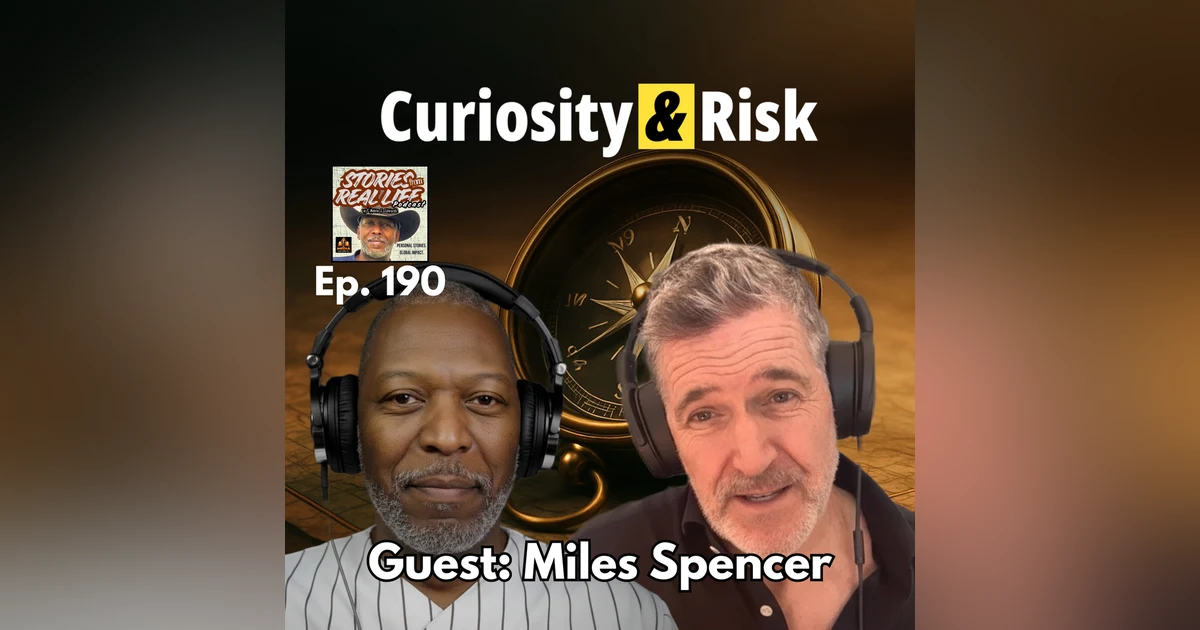
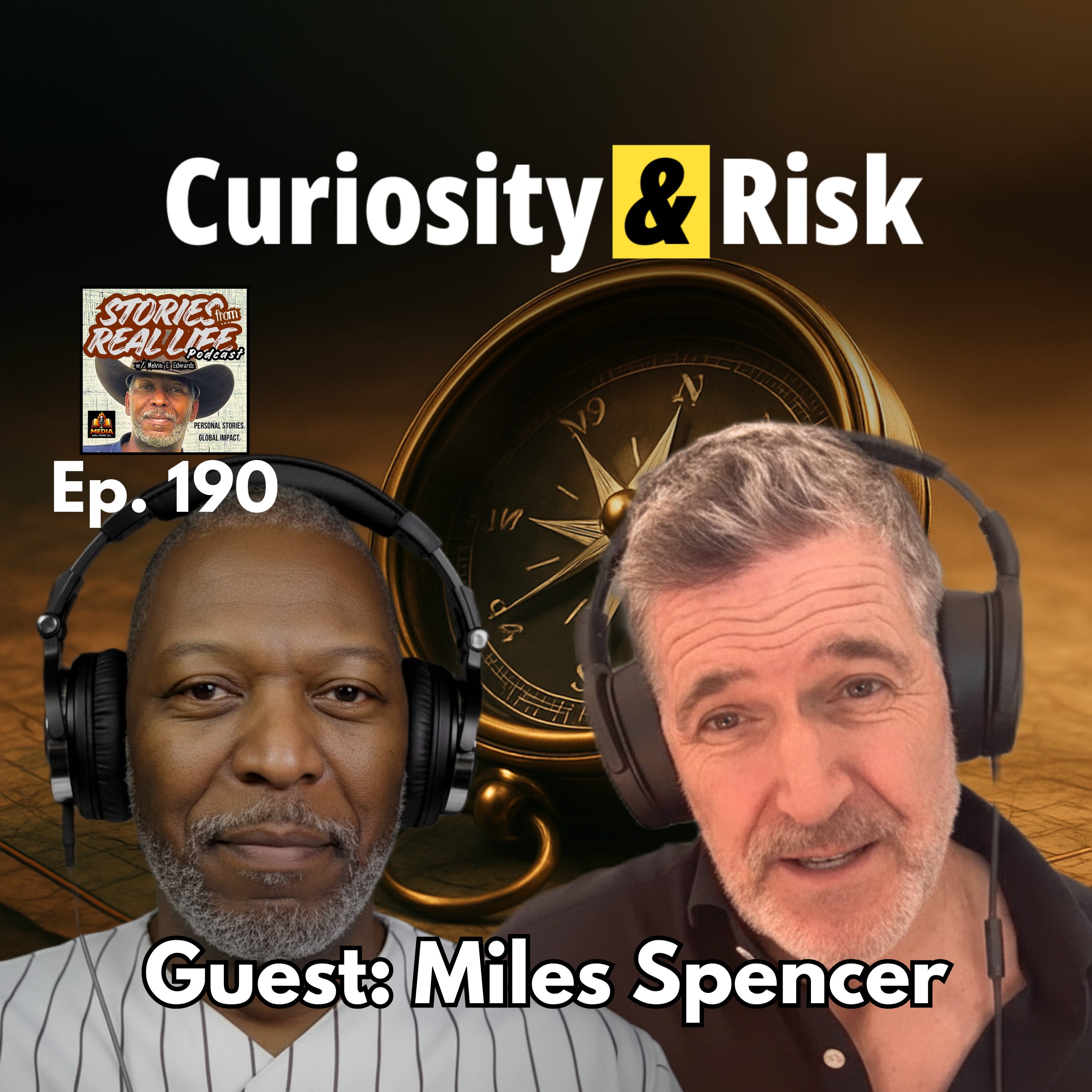
In this episode, Miles Spencer shares his incredible journey of curiosity-driven ventures, fearless risk-taking, and the power of storytelling to lead, inspire, and preserve legacy across generations. Discover how adventure and entrepreneurial spirit intersect in his life and learn practical insights on navigating failures, timing, and the future of digital storytelling.
Key Topics:
* Miles’s journey from childhood curiosity in Pittsburgh to global adventures
* How taking calculated risks shaped his business successes and failures
* The evolution of entrepreneurial media and the origins of “Money Hunt”
* Lessons learned from major setbacks like Trust Cloud and timing pitfalls
* The role of storytelling in leadership and building compelling visions
* How extreme physical challenges teach resilience and mind over matter
* The innovative Reflekta.ai platform for intergenerational and legacy storytelling
* The impact of AI and new media on the preservation and sharing of personal histories
* Balancing adventure, fatherhood, and holistic life pursuits
Get full access to Melvin E. Edwards at storiesfromreallife.substack.com/subscribe
If you would like to support this podcast, please click on the PayPal link to make a donation today. Any amount is the perfect amount!
Thanks!
0:03 on this edition of Stories from Real Life with Melvin E. Edwards. Our guest, Miles Spencer, is a longtime entrepreneur, investor, and storyteller who has built multiple digital media ventures, mentored founders for decades, and co-hosted the PBS entrepreneurial show, Money Hunt. His adventures, including leading large expeditions and a thousand-mile desert trek, inform his best-selling book, A Line in the Sand, and his broader work connecting leadership, storytelling, and exploration. This is Stories from Real Life with Melvin E. Edwards, and today's story is Miles Spencer's, What Happens When Curiosity Becomes a Career?
0:46 You are listening to Stories from Real Life, a podcast by engaging storytellers for engaged story listeners. Here's your host, author and journalist, Melvin E. Edwards. Hello again, and welcome to another episode of Stories from Real Life. I'm your host, Melvin E. Edwards. Thank you for joining me for the podcast where our personal stories remind us how much we can learn from each other. There are people who follow well-marked roads, and then there are people who seem drawn to the horizon itself, not because it's safe or even necessarily because it's profitable, but because something inside them insists on finding out what's over the next ridge.
1:33 Our guest today is one of those people. Myles Spencer has spent a lifetime at the intersection of risk, curiosity, and storytelling, building companies before entrepreneurial media was fashionable, and mentioning founders long before a startup culture became a buzzword. Myles, welcome to Stories from Real Life. Thanks for having me. Glad to have you here. You once described yourself as a curious kid from Pittsburgh. Are you still that kid? I am totally a curious kid from Pittsburgh, Pennsylvania that never really gave up asking who, what, why, where, when. What the heck happened to the Steelers this year? But I drove my parents' career. Draw my parents crazy, for sure.
2:14 But it also, it led to a life of adventure around the world, trying to experience different cultures and different civilizations, but bringing understanding back to us here in the West. And then ventures, starting businesses, mostly, as you mentioned, in digital media and creating a thousand jobs. It's important to note among those three big exits, there were 30 absolute failures but i learned from them so just so you understand what the batting average actually is and yes i remain that curious kid from pittsburgh pennsylvania who Thinks you might know what's around the corner and over the horizon, but is certainly going to go find out.
2:57 Okay. There's actually some overlap between Pittsburgh and Houston. Houston's my hometown. And in the 70s, when steel manufacturing started to dry up, lots of people moved from Pittsburgh to Houston. There's actually a Pittsburgh community in part of Houston. And if the Steelers are playing in Houston, it's almost like it's a home game for the Steelers. Did not know that. It's pretty interesting. All right. So was there a single risk you took that in hindsight defined everything that came after that? I hadn't thought of it that way, but I'm going to propose this as the answer. I was 13 years old. As I mentioned, I grew up in Pittsburgh, football, baseball. I was decent at both.
3:38 My parents, without consulting me, decided to move to Stowe, Vermont. Great skiing. My brother loved it. They had no football team and a baseball team so lousy, I was playing center field and leading off for the high school team when I was in eighth grade. I started looking around. I had to go to library back then for boarding schools that had football teams. And sure enough, someone said, you ought to go check out Choate. It's in Wallingford, Connecticut. And I submitted an application as a 13-year-old. I was late to the game. It's like two spots left. And everybody's like, what are you doing, man? Like, they got a football team.
4:19 We don't have one here in Stovermont. And as luck would have it, you know, once you take a risk, sometimes League of Luck comes to visit as well. The football coach worked in admissions. So he came down. He's just like, hey, it's like Stovermont. There's not a lot of football there. I said, yes, but I'm from Beaver, Pennsylvania. And he said, oh, Pat Tarquinio's program? I said, yes. I'll see you in September. That was it. So my big risk at the time was... going to boarding school when I was 14 years old. And I did not come from a boarding school type family.
4:59 And it was a wonderful experience. Well, it really is a small world. My son was recruited by a college in Beaver Falls, Pennsylvania. He ended up going to Elizabethtown, Pennsylvania. I don't know if you know what that is. But yeah, it is a small world. Wow. So you helped pioneer entrepreneurial media programming before Shark Tank existed. What did you see coming that others didn't? Well, I'd watched Wayne's World. What I realized was you could actually get a TV show on public access by paying 500 bucks and drumming up three cameramen from the local bar.
5:44 And you could have your own TV show that didn't guarantee it was any good. So we stuck with what we knew. What was simple was myself. I was basically an investment banker and partner was an attorney, still is. And so we had been inspired by someone who in a Q&A session, the month before said, you guys should do a radio show or a TV show. I was like, eh, why not? And so that was the very, very, very beginning of Money Hunt. We sent a tape to a guy by the name of Scott Carlin, who's running Warner Brothers television at the time. He asked me out to Hollywood. We sat down in the commissary. I'm looking around. It's like, oh man, that's Batman. I'm like, Like that's Wonder Woman. This is amazing. Yeah. And here's how to do the show and own it.
6:25 In the end, we syndicated it to public television and got on 230 stations in about six months and then 13 countries overseas. So that was Money Hunt. That was the predecessor to Dragon's Den, which was the predecessor to Shark Tank. I had actually ripped off the idea from Bernard Tepi's Entrepreneurs, which was on in France when I went to school there. So all of this and $7 gets you a cup of coffee at Starbucks in Grunge, Connecticut. So we steal from each other. Still pretty impressive though. That's pretty impressive. Yeah. So was there an early influence, like a person, book, or an experience that quietly shaped the trajectory of your own life?
7:10 I'm going to go with two, if I might. One is Seven Habits of Highly Effective People by Stephen Covey. And it was basically the way I was running my life, but I didn't have names and titles and process to it. And all of a sudden I'm reading this book and I'm like, oh, this is exactly it. And so I've used that to this day. That's, you know, 30 plus years. And it really helps me center what I want to head towards. I've also learned that the universe has a plan. So your plans aren't necessarily the priority. The second would be a book called Flow from a man named, believe it or not, Mahali Sestika Mahali.
7:56 Yeah, it's not as fun as it sounds. And flow is about the science of optimal performance. And so when you're bored, increase the challenge. And when you're anxious, increase the skill. In the middle, that's flow. Time goes away. And yeah, I honestly, I pursue that every day of my life. Okay. So when did you first realize that curiosity could actually become a career for you? I'm not sure I have. I'm just going with it. It's become something that I've just acknowledged. It's, you know, it's part of me and gets my, yeah, but usually is good.
8:44 But I think that curiosity kind of – the utility has its limits. Sometimes we want to solve every problem. How did that work? How did that happen? Why did she say that? Why did he do that? Et cetera. And the answer is sometimes there is no answer and curiosity just drives you nuts. So I am a curious kid, but I've put some guardrails on it. You mentioned several failures in what you called your batting average. So tell me about a failure that didn't just sting, but actually redirected the way you thought about what you were doing. What came to mind was a company called Trust Cloud. This was during the advent of shared services.
9:26 So that would be Airbnb, shared homes, Uber, shared cars, et cetera. And we thought, well, you know what? How are you going to trust somebody to come in and fix your washer driver when you don't even know this person, right? You might be away from home, you're letting them in. Or kids in a house. There's lots of downside. Right. And so instead of calling the plumber that, you know, from the neighborhood, you go on one of these lists and call this other guy. But who is he? Right. So we call it a trust cloud and basically we analyzed their social graph and other activities online. It wasn't just a credit check. It was really a behavior check.
10:08 And what we found was the big companies eventually had enough data that they could do those trust calculations themselves. The little companies that really needed us didn't have enough money to pay. And there were very few in the middle. Some of them got acquired by the big companies. So we had this wonderful product that really, truly, there was a need for it in the marketplace, just not enough. So how did that change things for you? You know... I guess the lesson that it taught me was even great ideas with poor timing ain't going to make it, right? And sometimes okay ideas with great timing are fantastic.
10:50 So don't fall in love just because it's truly a great idea. Well, how do people avoid getting crushed when they're sure they've got a great idea, but it turns out the timing just isn't right? Well, I mean, there's crushed in the marketplace and there's crushed in your heart. Right. So the way not to get crushed in your heart is don't get your expectations up. Right. Unlikely to be disappointed. Crushed in the marketplace when the timing is like, look, the reality is you're probably not going to get crushed. You're going to be ground down. over time, right? If the timing ain't right, well, if you're too late, you're done. If you're too early, how long can you stay liquid until the world comes around to your way of thinking? That's the only question.
11:30 The answer is usually as a startup, not very long. So was there a moment when success arrived for you, but it didn't quite feel the way you thought it would? Yeah. You know, look, I grew up to be taught that material things are not the end all be all in life. Spiritual things are those the true things that you should be pursuing. So it's kind of OK in terms of that empty feeling that many entrepreneurs that meet success all of a sudden like I thought to be happy. I've found that balance is key. So it's not just entrepreneurship that drives me, but adventure as well.
12:14 Fatherhood as well. Physical PBs are important to me. And just running a more balanced and holistic life for myself and trying to play it out for as long as I can. So let's talk about some of your adventures. During your desert trek, was there a point where your instinct just took over from all the preparation that you had done? Yeah. From an instinct point of view, I'm going to go to a checkpoint in...
12:56 Israel on the King Hussein Bridge, where we had trekked 1,100 miles through deserts of Saudi Jordan and Syria, did 30-some border crossings on foot, a nontraditional way to cross a border in the Middle East. Then we arrived on the King Hussein Bridge between Jordan and North Israel. Talk about a checkpoint. What are you doing here? Why were you on the other side? Why were you there for 26 days? Are you military? Are you a consultant? Are there more of you coming? Yeah. You have friends in Saudi Arabia? Do you have friends in Jordan?
13:36 I probably had a variety of answers to each one of those questions. But my instinct was that this border guard between Jordan and North Israel was just was not going to take anything but the raw, unvarnished truth. So I didn't doctor anything up at all. I got the impression that anything and everything that I was saying could and would be checked almost instantaneously. So I just stuck with my story. Yes, I have friends in Saudi Arabia and in Jordan, a few in Syria. What would you like to know about them? Right. So that was actually kind of against my training, which told me less is more.
14:20 But in this particular case with this particular woman, I just felt like, man, give her the most honest answer you possibly can. How long did it take to trek 1,100 miles? It was kilometers, but it was 27 days. So what does extreme physical challenge teach you about business that the business success itself couldn't teach you? A lot of it is mind over matter. So the physical challenges of hiking a desert or jumping out of the back of a vintage aircraft or scuba diving or... or actually repairing, uh, stitching in the field, uh, after an accident.
15:08 Um, to the end of the day, a lot of this stuff is mind over matter and, um, One good exercise that myself and my adventure partner, Wells Jones, and I both do relatively frequently is we swim in very cold water, like 40 degrees, and it won't kill you. As a matter of fact, it's great for your endorphins and things like that. It's really a good experience, but you got to convince your mind that you're going to break the ice and go for a swim. Your mind has a lot to say about that. Your body has even more to say once you get in. But if you calm your mind and realize that that's truly what controls the body, you'll be fine.
15:51 Same in business. So what happened once you got into that cold water? Well, I mean, physically, actually, your body goes into shock, right? And it starts bringing all of the vital functions around the center of your body. So your fingers go first, your toes go first, right? And first there's tingling, like pain. needles, but then it pretty much gets close to numb. It is advised you don't just sit there, you move and swim.
16:31 But the reality is, you know at what temperature, how long you have, and you know the temperature of the water going in, so you know how long you have. that you can be in there. And it's, you know, it's a high stakes experiment, but it has wonderful side benefits, not just the mind over matter, but the endorphins that are created when the body thinks, it's kind of like riding on a roller coaster, right? Why do we get so pumped about a roller coaster? It's like we're running around at 120 miles an hour and your mind's telling you, I'm going to die, I'm going to die, I'm going to die, right? And then the end, the ride ends and you're like, I didn't die. But I have all these backed up endorphins.
17:15 This is pretty cool. Same thing. Yeah. On these expeditions, what did you learn about yourself that you would have never thought beforehand? Most of that was just physical, whether it's 126 degree Fahrenheit heat in the desert or lack of food. or disorientation. It's amazing what the human body can not just endure, but recover from enough to make a decent decision to get yourself into a better spot. It ain't that bad.
17:57 Okay. So when you look back, what do you think risk or do you think risk is something that you choose or something that eventually chooses you? When risk chooses you, you're in a world of trouble. I choose risk and I choose risk after curiosity, preparation, repetition to the point where I've convinced myself or perhaps others that there is less risk here than others would perceive. That's where the fun starts. Wow, you kayaked across 14 miles of open water with a thousand other people. Like, who does that? Like, well, we did the math and you can.
18:40 And there are several other examples of... Curiosity, preparation, repetition, leading to adventure and risk. But the reward is often just understanding people and culture and civilizations that we're not familiar with. And so the big prize is to bring some of that back. So it sounds like the risk you take are calculated risk, not just random risky risk. I'm not a random risky risk guy. I have never jumped off a cliff that some local hasn't gone first.
19:21 Yeah, not a random risk guy, a calculated risk guy. Okay. So how has storytelling shaped the way you understand leadership now? It's really the only way to lead. You know, it's a great way to to get your team to build a boat. Let's say you're stranded on an island, right? But there's other island over there. You could clearly see like the music is blaring. They got plenty of food. There's plenty to drink, lots of entertainment. You describe that to your team, the vision of what it would be like to get there. It's amazing how quickly a boat can be built. So if you were Gilligan, how long do you think you and the...
20:04 The crew would have been stuck on that island. Great reference. I love the fact that me and you and perhaps your listeners are going to know what the heck that is. As a professor, the professor always had a pretty good idea. I got to believe that some of them didn't want to leave that island. It was perhaps better than the civilization that they left. So you got that going for you. I would have definitely enjoyed myself for a week. I do like a sunny beach and a few coconuts and a hammock. But then once I decided to get out... Okay. So you would have made it to season two, is what you're saying? No. One way or the other, I would have made the attempt...
20:47 and either be gone or be gone. All right. So is there a story about yourself that you had to revise over time? I mean, to a certain extent, we have stories, some of which are not that long. palatable to remember and so we burnish the edges of them to try to get them into some form that will fit in the box of our mind and allow us to go forward i mean as they say time heals all and i think that's because we forget things or we reposition them in a way that our mind and our journey can accept enough to go forward.
21:29 So yeah, I think all stories with time are burnished and that's so we don't go insane. You've spoken about preserving legacy in a digital age. What stories are we currently failing to capture as a society? When it comes to families, and their values and morals and legacies. Look, we've tried. We have shoe boxes upstairs of Polaroid pictures and slide trays and journals and love letters and football programs and birth certificates and immigration dockets. And they're all in the box gathering dust. And we go up at Thanksgiving like, what are these?
22:11 I don't know. I think it's grandma. Yeah, it's grandma's. Yeah. Well, it's mom's handwriting. Yeah. Oh, isn't that nice? Yeah. right okay maybe next year so we've had these memory devices um but each time a member of the store of the family passes on an entire library of stories burned to the ground And look, the memory devices of our time. Look, the Civil War, it was daguerreotype. You can see the horrors of the Civil War, right? The first time I ever came to New York media, the newspapers, it's like, oh my gosh, this looks bad. Problematics, wow.
22:52 Actually, Max was courthouse like, let's go to Shiloh. That was a pretty bad battle. In any event, these memory devices have been around forever and they did the best job they could. But now we have the technology to capture literally every legacy and every story from every family. Forever. And pass that on in a recognizable image and likeness of a family member capable of a spontaneous and dynamic conversation with somebody 100 years from now. Much better than a shoebox. Sounds much better. So that sounds like leading into my next question. How does storytelling and entrepreneurship intersect for you? You know, back to the building, the boat and the island, right?
23:34 I mean, you got to give your team a story and a vision and something to get behind and believe in. And my whole business is storytelling now. And... in the age of ai it's the only way to really get a point across and to engage an audience and so um the big winners one of the big winners in this digital new digital age is going to be the storytellers all right so with ai as you mentioned digital media shifts and changing attention spans what concerns you the most about the future of storytelling that the stories are lost the stories will always be created but if they're not ingested and stored and delivered in a way in which people want to access them.
24:22 I mean, God bless her. I don't think my daughter is going to go to chapter 37, page four of the family history to look up like what happened to grandpa in the first world war. She's just going to want to ask someone or something, right? And no harm intended to the book crowd, but that's not the only medium and it won't be going forward. So those are some concerns. What excites you the most about this new technology? Well, what excites me the most is, you know, we're talking about a technology that in the foreseeable future could chronicle the stories of planet Earth, literally humanity for eternity.
25:07 We've never been in a spot like that before. Now, I'm not talking about the New York Times and the New Yorker and Fox and CBS and CNN and what they think of news. I'm talking about individual people and their stories to be shared with families from their perspective. Never been recorded like it can be now. All right. So tell me about your business and how it relates to this. Yeah, I guess that's been the big tease the whole show. Reflect.ai is an intergenerational storytelling platform. And people will look at me like, what does that mean? And I just simply say, look, I talk to my dad every day.
25:48 And last night he read a bedtime story to his granddaughter, Rudyard Kipling, and they talked about it until she fell asleep. And people say like, okay, that's no big deal. It happens all the time. It's like, oh yeah, my dad died eight years ago. I said, oh, I'm so sorry for that. Like, no, it's okay. Actually, on this last day, he said to me that this body is temporal, but my spirit and soul is eternal. And when you can reconnect with that, you'll have me the rest of your life. Now, eight years ago, that technology didn't exist. Remember, the memory devices of the time were not that good. But today they are. And the reflective platform's capable of creating a recognizable image and likeness of a loved one, capable of a spontaneous and dynamic conversation.
26:31 It's not looking up chapter 37, page three. Like, ask me a question. Ask me another. And maybe I'll ask you one. That is what the reflective platform is capable of, both for those that have passed, my dad, And those that are still living and have stories to tell. We have military veterans. We have senior citizens. We have Alzheimer's patients. We have others with terminal diseases. We have people of faith that want to pass their beliefs on to their children, their grandchildren, their great-grandchildren. And they're all creating stories on the Reflective platform. How does it work? Is this voice cloning, voice interpretation? How does it work?
27:11 It works very well. So the way to build it now has become literally think of a story and start talking. So our biographer basically does an interview. Now it could be of you if you're creating a reflection of yourself or of a loved one. We call that past or reflection. And it builds this arc of a life and a timeline, all of which you approve. You are as the keeper, right? The one that had the shoebox. You own the account, you pay the bill, but you also get the final edit on any story that comes into the platform. So... It's relatively straightforward. You can get a recognizable image likeness going in 20 minutes.
27:53 And then as you load photos, and as you load videos, and as you load obituaries or biographies, et cetera, it continues to ask questions about it. It's like, hmm, this is Ant... donna in this picture like this must have been taken in 1975 so that means you were in like uh fairfield ohio at the farm that was the farm there right do you have a story about the farm do you have a story about someone else that lived on the farm should we ask the other people that you visit the farm about that they have a story about the person that we're talking it is a very curious Agent. And it'll create a great biography of the person and personality and character. And you ask about voice.
28:33 You can go on Reflected.ai and talk to my father, Arthur. And he asked about me. That voice was printed from a 10-second voicemail we found in his granddaughter's phone five years after he passed away. All of the stories from Arthur, all of his inflection and tone and his buddy Hackett jokes, they all come from that 10 second voicemail. His buddy Hackett jokes. I know that reference too. Oh, he's good. He's got a lot of them. Got a lot of them. All right. So I'm going to have a link to reflect in the show notes. But how can people... find out about this. How can people interact with this and how can they access this?
29:14 Yeah, it's just the website is Reflecta.ai. That's spelled with a K, like Reflections with a K. Reflecta.ai. You Google Reflecta.ai, you're going to get plenty you click on the show notes you're gonna get plenty and go in there and you can talk to my dad you can talk to the co-founder adam drake's uh grandmother virginia who was a ballerina during the second world war she's got some stories and um then you can imagine gosh what would that be like if we did this for grandma donna or uncle pete right and if you got a story about them you just click on the biographer and you start talking And it'll guide you through the process and you'd be surprised how quickly it takes hold.
29:55 Wow, that sounds really, really interesting. So I just have a couple of questions for you left as we start to wind down the conversation today. So again, I will have the link to the Reflecta. And by the way, Reflecta, the way you pronounce it, sounds like you were raised in Vermont. I spent one year in Vermont. This is very much Western Pennsylvania. That's pretty much what I talk like. Western Pennsylvania has a unique dialect too. So that's very unique. So what risk are you still considering taking at this point in your life? I'll tell you the risk I won't take. I won't take the risk of doing nothing at all. So not taking risks. I believe, is the biggest risk.
30:37 Makes sense. Makes sense. All right. So for a final question today, if people remember one story about your life, what do you hope it is? My namesake, Miles Sharpless Spencer, had 24 kids. He had his last kid when he was 74. The answer to your next question is three wives. I got to the point where I was in my late 40s, didn't have family. And after my mom passed away, decided that I wanted one. And so at the age of 50, spurred perhaps by the confidence from my great-grandfather's DNA, I had my first kid and my second.
31:26 And so I'm a young and sprightly 63 this year, and I feel great. So not everybody would start having kids with their 50, but I didn't. I think that answers your question. Yes, absolutely. So my guest today has been Miles Spencer, who encourages us to take more chances, tell more stories, and have more kids in your 50s. Miles, thanks for being here today. I really appreciate it. My pleasure. If this episode resonated with you, share it with someone who might enjoy hearing it as well. And if you haven't already, follow me wherever you listen to podcasts. This is Stories from Real Life.
32:06 Until next time, don't forget to shine your light wherever you go. That was Stories from Real Life. Join us again next week for another great storytelling journey. See you next time.


